
Views: 0 Author: Site Editor Publish Time: 2026-09-01 Origin: Site


You need a new machine for your stamping operation. Two main options sit in front of you. One offers open access and a lower price. The other delivers rigidity and precision at a higher cost. Which one fits your work?
Your choice depends on four things: precision, tonnage, part size, and budget. A Gap Frame design suits some jobs. A straight-side design suits others. You cannot pick well without weighing these factors.
This article gives you a systematic comparison. You will see how frame design, deflection, speed, and cost differ. That knowledge helps you match the right press to your stamping needs. You will also find a checklist for your next stamping project.
Gap frame presses give open access and cost less for light work.
Straight-side presses give high stiffness and accuracy for very heavy loads.
Pick a gap frame for small parts and fast die changes.
Pick a straight-side press for making a lot of parts with very tight tolerances.
Use the checklist to match tonnage, precision, and budget to what you need.
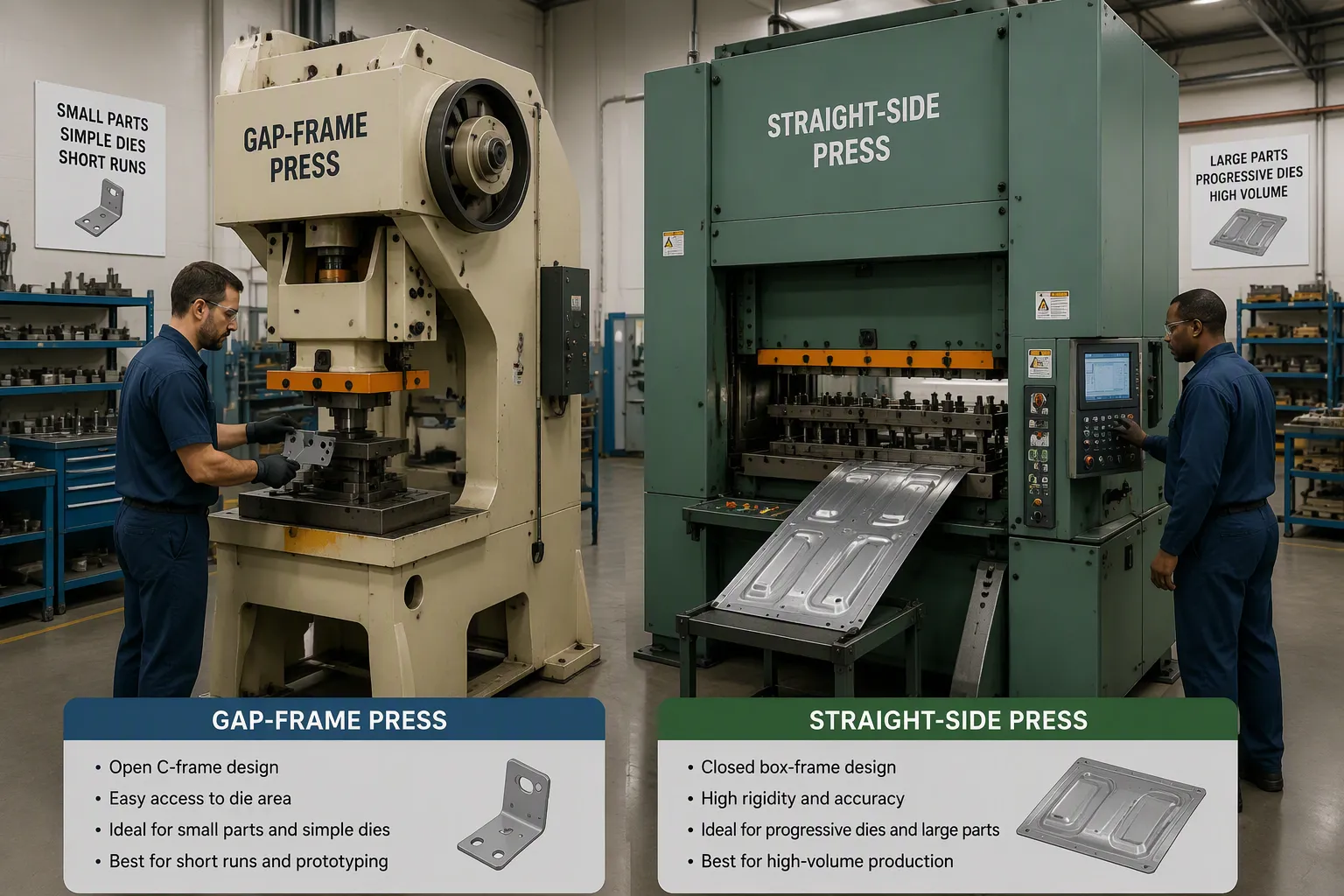
You will see the first difference as soon as you look at these two kinds of stamping presses. A gap frame press, also called a C-frame press, has an open front shaped like the letter C. This open side lets you reach the work from three sides. A straight-side press uses a closed box-frame. Its uprights fully wrap around the working area.
That difference in structure causes everything else. The table below shows how each design acts under load.
Press type | Structural design | Rigidity and deflection | Engineering implication |
|---|---|---|---|
Gap frame press | Open-front C-shape | Lower stiffness; higher deflection under load | Good access, but not ideal for high precision or high tonnage |
Straight-side press | Closed rectangular frame | High rigidity; even load distribution; reduced deflection | Handles higher tonnage and suits demanding forming work |
Frame deflection matters in manufacturing. Too much deflection causes uneven part thickness, tool wear, and poor dimensional accuracy. Engineers use strength-of-materials equations and finite element analysis to keep deflection within safe limits.
The frame design shapes what each press can do. Gap frame presses offer clear advantages for small-to-medium parts and quick die changes. You can reach the die area easily, which speeds up setup. These presses work well for basic stamping operations.
Straight-side presses shine in high-tonnage, high-precision jobs. Their closed structure holds alignment under heavy loads. One source notes that straight-side frame rigidity can improve dimensional accuracy by up to 30% compared with gap-frame presses. Above roughly 200 tons, straight-side presses preserve precision and extend die life more effectively.
This split affects your production planning. Gap frame presses suit flexible job shops running many small batches. Straight-side presses fit dedicated lines running progressive die stamping at high volume. Both are common stamping press types, but they serve different roles. Your applications decide which one earns a spot on your floor.
The open C-shape of a gap-frame press has a weak spot. Under a heavy load, the frame bends at an angle. This bend tilts the ram a little. The die then closes unevenly on the workpiece. You see the result in uneven part thickness and poor dimensional control. For high-precision jobs, that tilt becomes a big problem.
A straight-side press fixes this with its closed box-frame. The uprights connect the crown and bed into a strong loop. Load forces spread through the frame evenly. Bending stays small even at full tonnage. This design gives better accuracy and keeps tight tolerances over long production runs. One source says straight-side frame rigidity can improve dimensional accuracy by up to 30% compared with gap-frame presses. That gain matters when you stamp parts with tight tolerances.
Tonnage capacity comes from frame stiffness. Gap-frame presses usually handle light-to-medium loads. They work well for piercing, bending, and shallow forming. As you go to higher tonnage, bending grows. Part quality drops. Die wear speeds up. You reach a point where the gap-frame press can no longer hold the tolerance your stamping job needs.
Straight-side presses handle the heavy-duty range. Above about 200 tons, they keep precision and extend die life better than gap-frame designs. Their rigidity supports deep drawing, coining, and other tough stamping operations. The benefits show up in repeatability. You get the same part dimensions from the first stroke to the last. For precise and repetitive tasks at high volume, that consistency justifies the higher cost. Your stamping operation gets fewer rejects and longer tool life.
The bed size of each press type shapes how you handle parts. A gap frame press gives you a smaller bed. Yet its open front lets you load and unload from three sides. That access speeds up die changes and part removal. You can slide a new die in from the side without climbing over uprights. For small-to-medium stamping jobs, this layout saves time on every setup.
A straight-side press offers a larger bed area. Its uprights sit at the corners. This design supports bigger dies and wider coil stock. You can run progressive dies with more stations. The trade-off comes in access. You cannot reach the die area from the sides. You must load from the front only. For large stamping runs, that limitation rarely slows you down. The bed size pays you back in part capacity.
Cycle speed depends on frame stiffness and drive design. A gap frame press runs at moderate speed. Its lighter frame handles quick strokes for small parts. You get fast cycling on thin material. But heavy loads force you to slow down. The frame deflects more at high speed under load. That deflection hurts part quality.
A straight-side press holds high speed under full tonnage. Its rigid frame absorbs the shock of each stroke. You can run continuous strokes without losing accuracy. This stability makes straight-side presses ideal for automated lines. Feeders, transfer systems, and robots work best with consistent cycle times. Automation raises production efficiency and cuts labor costs. For high-volume manufacturing, the straight-side press delivers the speed and repeatability your line needs. Gap frame presses suit manual or semi-automatic work. Straight-side presses fit fully automated production.
Your budget shapes this decision as much as your parts do. A gap frame press costs less upfront. It uses less raw material and simpler hydraulic circuits. A straight-side press demands a much larger capital investment. Its heavy steel frame, high-capacity pumps, and cylinders drive the price up.
Installation adds another layer. A gap frame machine often sits on a standard industrial floor. Setup for a standalone unit typically takes days. A straight-side press may need a reinforced concrete foundation to handle its weight and vibration. Large transfer presses can require weeks of setup and alignment. Shipping, rigging, electrical work, and commissioning all add to the final bill. Request detailed quotations that list every ancillary requirement. That step lets you compare suppliers on equal terms.
Aspect | Gap Frame Press | Straight-Side Press |
|---|---|---|
Upfront cost | More affordable | Significantly higher |
Foundation needs | Standard industrial floor | Often reinforced concrete |
Installation time | Days for standalone units | Weeks for large transfer units |
Hidden costs | Lower ancillary expenses | Specialized technicians, larger floor space |
A gap frame press keeps upkeep simple. Its open design gives technicians easy reach to the ram, die area, and hydraulic lines. Routine maintenance takes less time. You spend less on parts and labor over the life of the machine.
A straight-side press demands more rigorous maintenance. Its closed frame hides some components behind uprights. You need specialized technicians for service calls. The larger footprint also raises floor space costs. Yet this rigidity pays you back in other ways. Fewer rejects and longer die life cut your per-part cost. For high-volume production, that trade-off often favors the straight-side design. Your stamping operation gains efficiency when the press holds tolerance stroke after stroke. Weigh the purchase price against the total cost of ownership. A cheaper machine that loses accuracy under load costs more in the long run. A rigid machine that runs for years without drift protects your manufacturing margins.
Now you can see the main differences between the two designs. How do you pick? The stamping press types out there today do different jobs. Your applications lead your choice. The right fit depends on your parts, tonnage needs, and how much you produce. Match your applications to the right machine to get the best results.
Gap-frame machines work best for lighter tasks. You will find them in small production lines and job shops. They handle piercing, bending, and light forming well. These jobs do not need extreme tonnage or very tight tolerances. The open frame lets you reach the die area fast. You can change dies quickly. Setup time drops because you can reach the work from three sides.
Small-to-medium parts fit a gap frame design. Think of brackets, simple panels, and shallow drawn parts. This design speeds up loading and unloading. These stamping press types keep costs low for moderate production volumes. You can run them by hand or with basic automation. These machines give you reliable precision for standard work.
The main advantages of gap-frame machines are lower upfront cost and simpler maintenance. Tooling changes take minutes, not hours. For jobs that change from week to week, this flexibility saves you money. If your work uses lighter gauges and standard tolerances, a gap frame press fits your floor. You gain efficiency through faster changeovers and less downtime.
Straight-side machines handle heavy-duty work. You need them for deep drawing, coining, and high-tonnage forming. These operations need very little deflection under full load. A straight-side frame gives you that stability. These types of stamping presses handle demanding jobs well.
Large parts and progressive die stamping benefit from the closed box-frame. You can run progressive die stamping with multi-station setups. Each station in progressive die stamping stays aligned stroke after stroke. This repeatability in progressive die stamping keeps part dimensions consistent across long production runs. Transfer stamping works well too. The rigid frame supports complex tooling without flex.
High-volume production lines depend on straight-side designs. They keep accuracy at high speed. Automation fits smoothly with their stable structure. You can add feeders, transfer systems, and robots without problems. The design supports faster cycle speed without losing accuracy. The machine handles each cycle the same way.
For high-precision tasks, the straight-side design beats gap options. Tolerances stay tight even at full tonnage. Die wear slows down because the ram closes evenly every time. This consistency improves manufacturing quality.
If your parts need deep draws or coining over 200 tons, a straight-side machine fits your needs. The higher initial cost pays for itself through fewer rejects and longer tool life. Your part quality improves stroke after stroke. The advantages of a rigid frame become clear in demanding applications. These two types of stamping presses solve different problems. Choose based on your tonnage, part size, and precision needs.
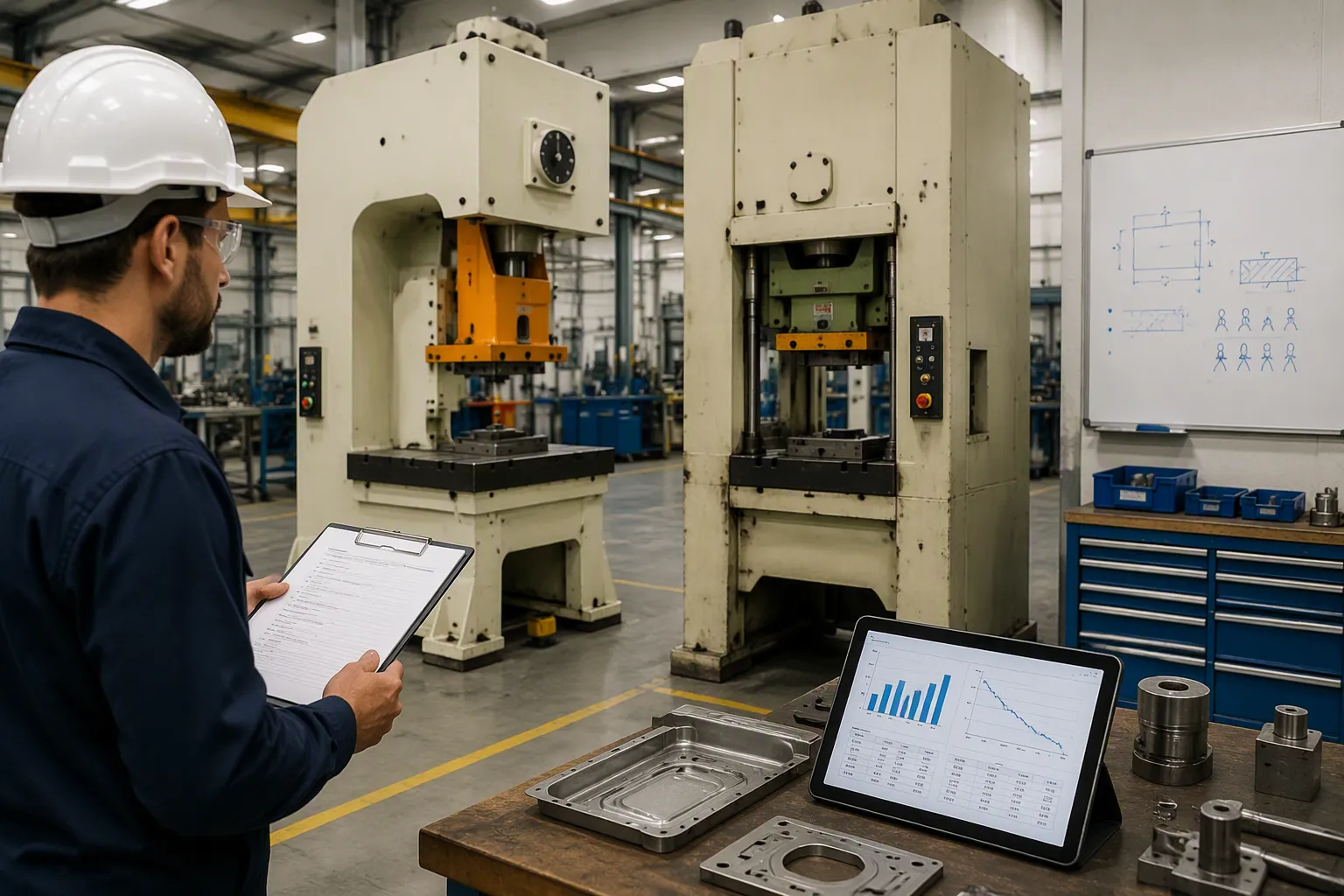
You have looked at the designs. Now you need a clear way to match a machine to your work. Use this checklist before you ask for any quote. It helps you narrow your choices fast.
List your part size and material thickness. Measure the largest part you plan to run. Write down the material grade and gauge. Large panels and thick blanks push you toward a straight-side frame. Small brackets and shallow parts fit a gap frame.
Figure out the tonnage you need. Add up the cutting, bending, and forming forces for your worst-case job. Add a safety margin on top. If your number goes above roughly 200 tons, the facts in this article point to a straight-side design for lasting accuracy.
Define your precision tolerance. Write down the tightest tolerance your customer accepts. Loose tolerances work with a gap frame. Tight tolerances over long runs need the rigidity of a closed frame.
Estimate your production volume. Count the parts you need each month and each year. Low volumes with frequent die changes favor a gap frame. High-volume production with few changeovers favors a straight-side machine.
Set your budget limit. Include the purchase price, foundation work, installation, and ongoing upkeep. A gap frame costs less upfront. A straight-side machine costs more but often earns that money back through fewer rejects and longer die life.
Score each item against both designs. The pattern usually becomes clear after step three or four. If the checklist points in two directions at once, weigh your tolerance and volume needs above all else. Those two factors drive the real cost of poor part quality.
A checklist gets you close. It cannot replace an expert review of your specific jobs. Contact a press manufacturer when your tonnage estimate sits near the 200-ton line, when your tolerances are unusually tight, or when you plan to add automation later.
Bring real data to that talk. Share your part drawings, material specs, tonnage calculations, and volume forecasts. Ask the supplier to confirm your frame choice and to size the drive and bed for your dies. A good supplier will also point out foundation requirements and service access before you sign.
Ask about the full range of types of stamping presses the supplier builds. Some manufacturers offer both gap frame and straight-side models. That range lets them recommend the honest fit instead of pushing one design. Discuss your plans for progressive die stamping and transfer stamping as well. A progressive or transfer line places different demands on frame stiffness and cycle speed than a single-station operation does. The supplier can match the frame, the feed system, and the controls to your line.
Finally, ask for a trial or a reference visit. Watch a machine run a job similar to yours. Check the part quality at full tonnage. This step confirms the numbers on paper. It also shows you how the machine behaves in daily manufacturing use. A short visit often settles the decision faster than another round of quotes.
A gap frame press gives you open access and a lower price for lighter stamping jobs. A straight-side press delivers precision and rigidity for heavy-duty, high-volume production. Your application needs decide which machine fits.
Use the checklist to evaluate your next stamping project. Compare tonnage, tolerance, and volume. If you still feel unsure, contact a press supplier for a tailored recommendation. That step protects your efficiency, speed, and part quality.
A gap frame press is best for light-to-medium loads. Its open C-shape bends when the force is heavy. That bending tilts the ram and hurts part accuracy. Above about 200 tons, you lose precision and die wear speeds up. Pick a straight-side design for heavy-duty stamping jobs.
Deflection causes uneven part thickness and poor dimensional control. The ram closes unevenly on the workpiece. You see the result in rejected parts and faster tool wear. A straight-side frame spreads load forces evenly. One source notes its rigidity can improve dimensional accuracy by up to 30% compared with gap-frame presses.
A straight-side press fits automated lines better. Its rigid frame holds high speed under full tonnage. Feeders, transfer systems, and robots work best with steady cycle times. A gap frame press suits manual or semi-automatic work. Heavy loads force you to slow down on that design.
Often, yes. A straight-side press may need a reinforced concrete foundation to handle its weight and vibration. Large transfer units can require weeks of setup and alignment. A gap frame machine usually sits on a standard industrial floor. Setup for a standalone unit typically takes days.
Contact a supplier when your tonnage estimate sits near the 200-ton line. Do the same when your tolerances are unusually tight or you plan to add automation later. Bring part drawings, material specs, and volume forecasts. A good supplier confirms your frame choice and sizes the drive for your dies.