
Views: 0 Author: Site Editor Publish Time: 2026-02-10 Origin: Site


The C Frame Power Press is a key machine in modern manufacturing, designed to shape, punch, bend, and emboss metal sheets with precision. Whether you’re handling light or heavy-duty materials, this versatile press delivers efficiency and accuracy. In this guide, we’ll explore the working principle, operation steps, and safety measures, helping you understand how to maximize productivity. You’ll also learn about different types, key components, and practical tips to make your shop safer and more efficient while boosting output. Let’s dive into the world of C Frame presses.
A C Frame power press is a versatile machine used in manufacturing. It reshapes metal sheets or profiles by applying controlled force. At its core, it relies on a strong frame, a ram, and matching die tools. They are widely used because they are simple yet powerful.
The name comes from its unique frame shape. Picture a giant “C” hugging the work area. The open side allows easy access for operators and tools. It also keeps the machine compact while supporting heavy loads.
Stability: The rigid frame absorbs force, reducing vibration during operation.
Accessibility: Open design makes loading and unloading parts easier.
Durability: Built from steel or cast iron, it withstands continuous heavy use.
| Operation | Description |
|---|---|
| Blanking | Cutting flat shapes from sheet metal. |
| Punching | Creating holes or slots in metal sheets. |
| Bending | Forming angles or curves in parts. |
| Embossing | Making raised or indented patterns. |
| Coining | Applying high pressure to imprint designs or details. |
It can handle light or heavy-duty tasks depending on type and tooling. Mechanical, hydraulic, or pneumatic versions exist. They all use the same principle: ram presses material into shape efficiently.
A C Frame power press may look simple, but it’s made up of several critical parts. Each component plays a role in shaping metal efficiently and safely.
The C-shaped structure forms the backbone of the press.
Made from cast iron or high-quality steel for maximum durability.
Absorbs energy during operation, keeping vibrations low.
Open design allows easy tool changes and better operator access.
The ram moves up and down to cut, punch, or shape material.
Typically follows a straight-line motion for precise results.
Its speed and force depend on the type of drive system.
The die sits on the press bed; the punch presses material into it.
They work together like a mold and a stamp.
Common operations include blanking, bending, punching, and embossing.
Example die shapes: square, circular, and custom profiles.
| Type | Components | How It Works |
|---|---|---|
| Mechanical | Flywheel, crankshaft, clutch, brake | Converts rotational motion into linear force for the ram |
| Hydraulic | Cylinders, fluid controls | Uses hydraulic pressure to move ram precisely |
| Pneumatic | Air compressor, cylinder | Compressed air powers ram motion for lighter tasks |
| Electric | Motor, gear system | Motor drives ram directly, suitable for variable speeds |
Keeps moving parts running smoothly and reduces wear.
Common practices include automatic or manual oiling points.
Helps extend machine life and ensures consistent performance.
Presses often include guards, interlocks, and emergency stop buttons.
Operators should always use PPE, such as gloves, safety glasses, and ear protection.
Regular checks and training reduce accident risks and improve workflow.
Understanding how a C Frame power press operates helps operators use it efficiently and safely. It may seem complex, but the principle is straightforward.
The press converts rotary motion from a motor or flywheel into linear motion of the ram.
The ram moves down, pressing the punch into the die.
The force shapes, cuts, or bends the metal exactly as needed.
The process repeats hundreds or thousands of times per hour, ensuring high production efficiency.
Hydraulic and pneumatic systems adjust force smoothly for different materials.
Setting up the die and punch
First, secure the die firmly on the press bed and align the punch on the ram. Make sure everything is oriented correctly to achieve precise shaping.
Loading the material
Carefully place the metal blank on the die, ensuring it sits flat. Use guides or stops to keep the material properly aligned during operation.
Activating the ram
Engage the drive system, whether it’s motor-driven, hydraulic, or pneumatic. The ram then moves straight down, pressing the material into the die.
Metal forming process
As the ram presses down, the material deforms to match the die shape. This process can include blanking, punching, bending, embossing, or coining.
Part removal and inspection
After forming, lift the ram and carefully remove the finished part. Inspect the piece for accuracy and quality before starting the next cycle.
| Step | Key Tip |
|---|---|
| Die & Punch Setup | Double-check alignment before operation |
| Loading Material | Keep hands clear; use tools for large sheets |
| Ram Activation | Adjust speed and pressure based on material |
| Forming Process | Watch for proper deformation and repeatability |
| Part Removal | Inspect parts to ensure consistency |
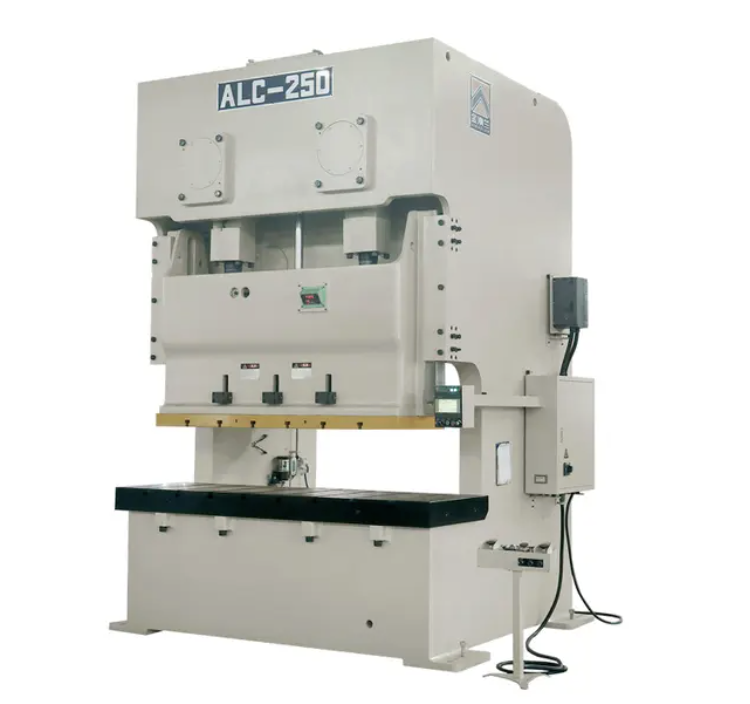
Operating a C Frame power press can be risky if proper safety measures aren’t followed. Let’s break down essential practices for safe use.
Operators must receive formal training before using the press. They should understand load capacities, ram operation, and emergency procedures. Certification ensures they are qualified to handle high-force machinery safely. Regular refresher courses help maintain awareness and reduce accidents.
Proper guarding prevents accidental contact with moving parts. Two-hand control systems require both hands to activate the ram, keeping hands out of danger zones. They are simple but highly effective safety features.
Emergency stop buttons must be easily accessible. Operators should know how to activate them instantly in case of a problem. Lockout/tagout procedures ensure the press cannot start during maintenance or repairs, protecting workers from unexpected motion.
Operators should wear safety glasses, gloves, and hearing protection. Steel-toed boots and aprons are recommended in many workshops. PPE reduces the risk of injury from metal shards, noise, and moving components.
All operations should follow OSHA guidelines and relevant industry safety standards. Regular audits and compliance checks help identify hazards and enforce proper practices. Staying up to code protects both employees and the facility.
| Safety Area | Key Action |
|---|---|
| Training & Certification | Complete courses and maintain records |
| Guarding & Two-Hand Control | Install barriers and use dual activation |
| Emergency Stop & Lockout | Place buttons accessibly and follow procedures |
| PPE | Ensure operators wear eye, hand, and ear protection |
| Compliance | Conduct audits and follow OSHA rules |
A: C Frame presses primarily handle sheet metals like steel, aluminum, and copper. They can also work with plastic sheets and light alloys depending on tooling.
A: Mechanical presses use a flywheel and crankshaft for fast, precise strokes. Hydraulic presses use fluid pressure, offering variable force and better control for thicker or tougher materials.
A: Provide training, use guards and two-hand controls, wear PPE, follow lockout/tagout procedures, and adhere to OSHA and industry safety standards.
A: With proper maintenance, lubrication, and careful operation, a C Frame press can last 15–25 years or longer in industrial use.
A: Yes, they can integrate digital controls, sensors, and robotic feeders to increase speed, precision, and efficiency for high-volume manufacturing.
Understanding the C Frame Power Press opens doors to smarter, faster, and safer metal forming. By mastering its operation, from die setup to ram activation, you can achieve consistent, high-quality results for every project.
At Zhejiang Jinaolan Machine Tool Co., Ltd., we provide reliable C Frame presses built for durability and precision. Whether you’re upgrading your production line or starting a new project, our machines are designed to help you work smarter and faster. Explore our range today and see the difference in efficiency and quality.