
Views: 0 Author: Site Editor Publish Time: 2026-08-24 Origin: Site


Manual press lines eventually hit a hard operational ceiling. Human labor limits dictate cycle times, part consistency, and overall workplace safety. Stampers and OEMs face immense pressure to increase production capacity and reduce per-part costs. Building entirely new greenfield facilities is rarely feasible due to land acquisition and construction timelines. Instead, transitioning existing equipment into an automated stamping line offers a practical path forward. This engineering project requires rigorous evaluation of your current floor. You must assess press configurations, existing tooling compatibility, and facility constraints to ensure a successful retrofit. Converting manual operations into a synchronized, continuous process demands precise mechanical and electrical integration. Upgrading legacy systems involves more than simply placing a robot between presses. It requires a comprehensive overhaul of material handling, die protection, and safety protocols to maximize throughput and extend the lifespan of your existing capital equipment.
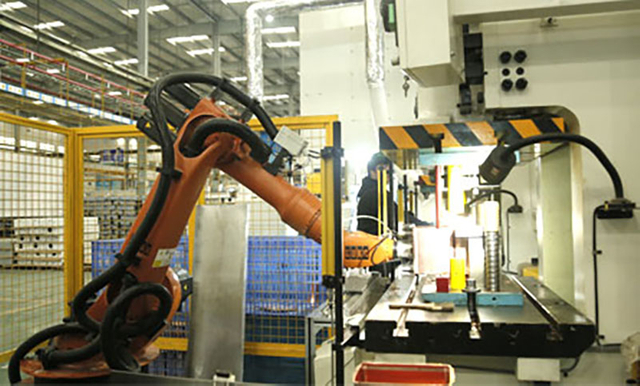
Converting to an automated stamping line typically yields a 20% to 40% increase in production capacity (often reaching benchmarks of 18+ strokes per minute) while eliminating high-risk manual handling stations and reallocating multiple operators per shift.
The primary architectural decision lies between implementing press-to-press robotic transfer systems or retrofitting for a continuous tandem line.
Financial planning must account for hidden integration costs, including tooling modifications, die clearance adjustments, and end-of-line handling (semi-automatic racking or fully automated stacking).
Successful implementation requires a phased downtime strategy to mitigate production losses during the mechanical and electrical retrofit.
Table of Contents
Before purchasing automation hardware, you must establish clear baseline metrics. You cannot improve what you do not accurately measure. Auditing current production data highlights the specific bottlenecks a retrofit will resolve. Calculate your current Overall Equipment Effectiveness (OEE) by measuring availability, performance, and quality. Document existing scrap rates and track manual labor costs per shift. These figures form the foundation of your business case. You need precise data to justify the capital expenditure of an automation upgrade. Look closely at micro-stoppages—those brief moments where an operator pauses to adjust a blank or clear a slug. In a manual setup, these go unnoticed. In an automated setup, they trigger system faults and halt production.
Facility infrastructure often dictates the scope of your automation project. A comprehensive floor space audit is mandatory. You must account for the footprint required by robotics, safety fencing, and automated material handling systems. Heavy automation equipment also demands specific foundation requirements. You cannot bolt a heavy-payload 7-axis robot to a standard 6-inch factory floor. The dynamic loads will tear the anchors loose. You need core sampling to determine concrete depth and PSI ratings. Often, you must pour isolated, reinforced concrete pads. Vibration isolation mounts are mandatory to prevent press shockwaves from destroying sensitive robot encoders and servo drives.
Evaluate your existing press controls. Legacy relay-logic panels or outdated programmable logic controllers (PLCs) rarely communicate with modern automation protocols. They lack the processing speed to handle the high-speed I/O required by robotic handshakes. Determine whether your current systems require simple communication modules or a complete electrical retrofitting to support EtherNet/IP or PROFINET standards. Upgrading to modern safety PLCs is non-negotiable for integrating light curtains, gate switches, and emergency stop circuits across the entire cell.
Press and tooling compatibility requires deep mechanical analysis. Analyze existing press specifications, including shut height, stroke length, and tonnage curves. You must evaluate mechanical drive capabilities thoroughly. A manual press cycles intermittently, giving the motor time to recover. An automated press runs continuously. Determine if the machine's stored flywheel energy and clutch/brake systems can sustain continuous, high-force linear strokes. Excessive wear on legacy dry friction clutches can cause catastrophic failure. You may need to upgrade to a pneumatic wet clutch system to dissipate the massive heat generated during high-SPM operations.
Evaluate current die designs for automation readiness. Manual dies are built for human hands and often lack the necessary features for automated part transfer. Check if your dies have adequate lifters, part-present sensors, and efficient scrap shedding capabilities. If a slug fails to clear the die shoe, an automated system will stamp right over it, shattering the tooling. You must modify scrap chutes and add pneumatic shakers to ensure gravity effectively clears the waste material before the next cycle initiates.
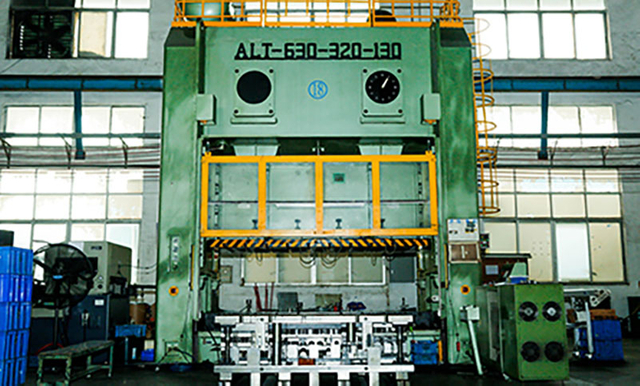
Press-to-press robotic transfer systems utilize 6-axis or 7-axis robots to move blanks between existing standalone presses. These articulated robots mimic human motion but operate with extreme precision and consistency. They pick parts from one die station, reorient them if necessary, and place them accurately into the next press. A 7-axis system mounts the robot on a linear rail, allowing a single unit to service multiple presses spaced far apart.
The primary advantage of robotic transfer is high flexibility. These systems handle complex part geometries easily. They are highly adaptable and easier to retrofit into irregular floor plans where presses are not perfectly aligned. Robots can perform complex part reorientation between stations, which simplifies die design by eliminating the need for in-die cam flippers. End-of-arm tooling (EOAT) utilizes venturi vacuum generators or magnetic grippers to secure the sheet metal during high-speed transit.
However, robotic systems generally achieve slower strokes per minute (SPM) compared to dedicated transfer presses. The physical mass of the robot arm limits acceleration and deceleration rates. They typically max out between 8 to 15 SPM depending on the distance between presses. They also require complex programming and meticulous EOAT management. Every new part profile requires a specific gripper configuration, which adds to changeover times if not managed with automatic tool changers on the robot wrists.
Tandem retrofits link multiple presses via linear transfer rails or crossbar feeders. This configuration creates a highly synchronized, continuous production line. Parts move linearly from station to station along a rigid transfer mechanism driven by heavy-duty servo motors. Instead of an articulated arm swinging through space, a crossbar lifts the part, moves it horizontally, and lowers it into the next die in one fluid, synchronized motion.
This approach delivers maximum throughput. Tandem lines frequently target 18+ SPM, depending heavily on draw depth and part size. They provide highly synchronized continuous operation, making them ideal for high-volume, low-mix production environments like automotive body panels or appliance housings. The mechanical linkage ensures that the transfer mechanism and the press ram are always in perfect phase, eliminating the risk of a robot-to-ram collision.
The drawbacks include strict requirements for die pitch uniformity. All dies must align perfectly along the transfer axis. You cannot have varying distances between die centers. This configuration also demands higher initial capital expenditure and significant mechanical synchronization between the individual press drives. If one press faults, the entire line stops immediately. Retrofitting a tandem line requires precise laser alignment of all press beds to ensure the transfer rails do not bind during operation.
Selecting the correct automation architecture depends on your specific production variables. Use the matrix below to guide the selection between robotic and linear transfer systems based on your facility constraints and production targets.
Evaluation Criteria | Robotic Transfer Systems | Tandem / Linear Transfer |
|---|---|---|
Part Volume & Mix | Low to medium volume, high mix | High volume, low mix |
Part Complexity | High (requires complex 3D reorientation) | Low to medium (straight linear progression) |
Existing Press Spacing | Irregular, wide, or uneven spacing acceptable | Requires precise, uniform, and tight spacing |
Throughput Target (SPM) | Generally 8 to 15 SPM | Frequently 18+ SPM |
Tooling Uniformity | Can accommodate varying pass-line heights | Requires identical pass-line heights across all dies |
Capital Expenditure | Moderate CapEx, scalable integration | High CapEx, extensive mechanical retrofitting |
Automated blank feeding eliminates the primary bottleneck of manual line feeding. Manual operators cannot consistently load heavy steel or aluminum blanks at the speeds modern presses can achieve without risking severe ergonomic injury. Front-of-line automation requires several integrated mechanical and pneumatic components to function reliably.
Magnetic fanners separate steel blanks to prevent sticking caused by mill oil and vacuum suction between sheets. Pneumatic peel cylinders lift the top sheet slightly, allowing air to break the surface tension. Double-blank detection sensors use contact or non-contact magnetic thickness measurement to ensure only one sheet enters the die. If two blanks enter the forming station simultaneously, the combined thickness will exceed the die clearance, resulting in catastrophic tooling damage and a blown press overload. Auto-threading systems then guide the material precisely into the first forming station. Automated destacking ensures continuous press utilization and drastically reduces operator fatigue.
In-press automation relies heavily on in-die sensing and part tracking. You must instrument your tooling to provide real-time feedback to the press control. Inductive proximity sensors, optical lasers, and mechanical contact switches verify part seating and ejection. If a part is misloaded or fails to eject, this sensor network communicates directly with the press control to stop the ram instantly, preventing die crashes.
Integrating automatic tooling change (ATC) systems or rolling bolsters further optimizes press utilization. These systems reduce changeover times from hours to minutes. Quick die change (QDC) hydraulic clamps replace manual bolts, securing the die shoe to the bolster with consistent, measurable force. Automated die carts allow operators to stage the next tool while the press is running. Once the run finishes, the rolling bolster slides the old die out and the new die in, automatically connecting pneumatic and electrical utilities via multi-coupling plates.
End-of-line offloading is often considered the last frontier of pressroom automation. Speeding up the press line is futile if end-of-line offloading remains manual. Parts will simply pile up on the exit conveyor, forcing the press to stop and wait for the human operators to catch up. Fully automated solutions include robotic bin picking using 3D vision systems, automated part stacking, and conveyor-to-autoracking systems.
These technologies handle finished parts carefully, preventing cosmetic damage on Class-A surfaces. Vision systems identify the orientation of the part on the belt, allowing the robot to adjust its grip dynamically. For facilities not yet ready for fully robotic offloading, semi-automatic end-of-line racking serves as a transitional, cost-effective alternative. It utilizes indexing conveyors and drop stations to pace the operators and improve ergonomics without the high capital requirement of full robotic integration.
Modern automation extends beyond physical hardware. Transitioning to an intelligent press shop involves connecting the automated equipment to Industrial Internet of Things (IIoT) platforms. This integration pulls raw data directly from the press PLCs, tonnage monitors, and transfer servos. It enables real-time OEE dashboards that display line performance instantly on the shop floor.
Predictive maintenance alerts monitor servo motor temperatures, bearing vibration levels, and hydraulic oil degradation. This data warns maintenance technicians of impending mechanical failures before they cause unplanned downtime. Automated quality tracking logs press tonnage signatures for every single stroke. If the tonnage spikes or drops outside the control limits, the system flags the part for inspection, ensuring consistent part quality and complete traceability for automotive or aerospace clients.
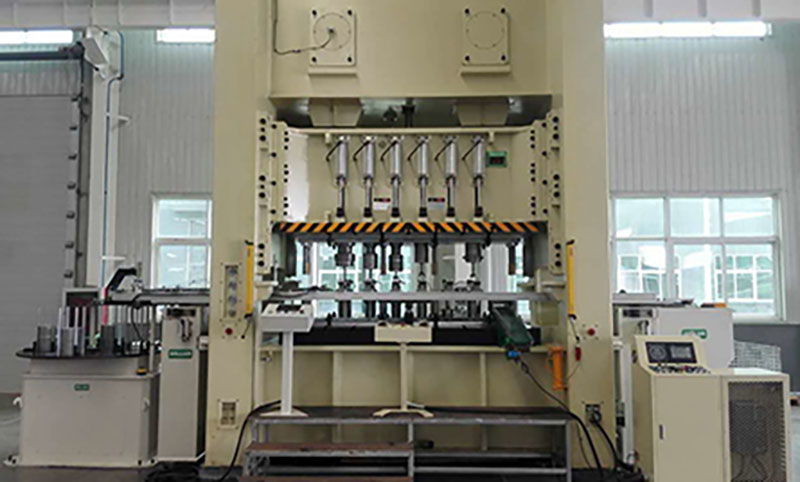
Building a realistic capital expenditure analysis requires comparing upfront hardware costs against long-term labor reduction. The initial cost of automation hardware, safety fencing, heavy-duty EOAT, and integration engineering is substantial. However, this investment directly eliminates multi-shift manual labor. You can reallocate three to four operators per line to higher-value tasks like quality control or machine programming.
Across a three-shift operation, eliminating manual loading removes significant payroll expenses, benefits, and administrative overhead. Automation also drastically reduces workers' compensation claims associated with repetitive lifting, lacerations, and pinch-point injuries. Lower scrap rates, driven by consistent automated handling and precise blank placement, further accelerate the financial return. Automated systems do not get tired, they do not drop parts, and they load the die perfectly every single cycle.
You must also balance cycle time increases against tooling adaptation costs. Achieving higher SPM requires modifying legacy dies. Manual dies often lack the necessary clearances for robotic grippers or transfer rails. Adding nitrogen gas springs to replace worn coil springs, modifying scrap chutes for automated shedding, and embedding in-die sensors require significant capital and toolroom hours. You must evaluate whether the throughput gains justify the cost of retrofitting your entire tooling library. In some cases, it makes financial sense to only automate the dies that run high-volume jobs.
Maintenance overhead shifts significantly after automation. You replace low-skill manual labor costs with high-skill automation technician salaries. Complex servo drives, robotic controllers, and 3D vision systems require specialized troubleshooting. You cannot fix a faulted servo drive with a wrench. Preventative maintenance contracts with automation integrators become essential to ensure maximum uptime. Factor these ongoing technical support costs, software licensing, and specialized spare parts inventory into your long-term operational budget.
Installing automation hardware requires taking the press line offline. Tearing up the floor, pouring concrete, and pulling new electrical conduit cannot happen while the press is running. Managing this downtime is critical to maintaining supply chain commitments. Implement a phased installation strategy to mitigate production losses.
Build a substantial buffer inventory of stamped parts before decommissioning the manual line to sustain assembly operations.
Automate the front-of-line destacking first, validate its performance with manual unloaders, and stabilize the process.
Install and commission the press-to-press transfer robots during a scheduled holiday shutdown or extended weekend.
Integrate the end-of-line autoracking systems once the primary transfer automation achieves the target SPM.
Operator displacement is a reality of pressroom automation. Change management requires clear communication and proactive workforce upskilling. Do not simply lay off your manual operators; retrain your existing staff to manage the new technology. Former manual loaders possess deep tribal knowledge of how the dies behave and how the metal forms. Transition them into supervisory control roles.
Provide formal training for robotic programming, Human-Machine Interface (HMI) operation, and basic system troubleshooting. Teach them how to recover a robot from a fault, how to clean optical sensors, and how to adjust vacuum gripper pressure. Investing in your workforce ensures you have the internal expertise to keep the automated line running efficiently without constantly calling outside integrators for minor faults.
Converting to an automated system mandates strict safety upgrades. Human operators no longer interact with the dies during production, but maintenance personnel still enter the cell for die changes and troubleshooting. You must physically separate humans from moving machinery. Install safety light curtains at all material entry and exit points. Use area laser scanners to detect human presence inside the robotic work envelope.
Implement heavy-duty interlocked perimeter guarding to shut down the system instantly if a door opens. Update your lockout/tagout (LOTO) procedures to comply with current OSHA and ISO standards. Safety PLCs must manage the complex interactions between press rams, transfer robots, and automated destackers. The system must guarantee that all stored energy—electrical, pneumatic, and kinetic—is completely isolated and bled off before a technician steps inside the fence.
Schedule a comprehensive site audit and baseline OEE assessment to quantify your current production bottlenecks.
Conduct a detailed tooling review with an automation integration specialist to determine die modification requirements.
Run a 3D facility simulation to accurately map floor space, robot reach, and safety zones before purchasing hardware.
Develop a phased retrofit schedule to minimize production downtime and protect your supply chain commitments.
For manufacturers looking to modernize stamping operations, the right combination of press equipment, tooling, automation, and technical support is essential for achieving reliable productivity gains. Kinglan provides solutions for metal stamping and press applications, supporting manufacturers as they build more efficient, integrated, and production-ready stamping systems.
A: The realistic ROI timeframe typically ranges from 18 to 36 months. This duration depends heavily on your current shift structure, local labor rates, and the specific throughput gains achieved. Operations running three shifts usually see a faster return due to the immediate elimination of multi-shift manual labor costs and reduced scrap rates.
A: Yes, older mechanical presses can be automated, but it requires significant upgrades. Legacy presses usually require extensive electrical control retrofits to interface with modern automation protocols. You will likely need new clutch and brake systems, along with advanced safety retrofits, to safely manage continuous flywheel energy transfer and stop the ram instantly.
A: A tandem press line consists of multiple individual presses linked together by automated transfer mechanisms, such as robots or linear rails. A transfer press is a single, large-bed press containing multiple die stations inside one frame, utilizing an internal transfer system to move parts between those stations.
A: Automation drastically reduces die changeover times. Automated stamping lines often incorporate quick die change (QDC) systems, automatic tooling change (ATC) mechanisms, and rolling bolsters. These technologies allow operators to swap heavy tooling and connect utilities in minutes rather than hours, significantly increasing overall press availability.
A: Space requirements vary heavily based on specific robot reach, required safety fencing, and the footprint of destacking zones. There is no universal minimum. You must conduct a custom 3D facility simulation prior to integration to ensure the robots have adequate clearance to maneuver parts without colliding with building columns or other equipment.