
Views: 0 Author: Site Editor Publish Time: 2026-09-21 Origin: Site


Selecting the right press architecture requires balancing required tonnage with operational flexibility. Over-engineering wastes floor space, while under-speccing leads to frame deflection and tooling damage. Facility managers and production engineers often struggle to determine the exact threshold where an open-gap press becomes a liability rather than an asset. You face this dilemma constantly when comparing job-shop versatility against high-volume rigidity. We built this guide to provide a technical evaluation framework. It helps you determine when a gap-frame machine is the optimal solution for your shop floor. We analyze mechanical limitations, ideal use cases, and overall operational efficiency. You will learn how to match die requirements to frame capabilities, avoiding costly misalignments. This ensures your equipment selection process relies on hard data rather than guesswork.
Optimal Use Cases: C-frame presses excel in operations requiring three-sided access, frequent tool changeovers, and small-to-medium production runs.
Structural Limitations: The open-gap design is inherently susceptible to angular deflection (gaping) under near-maximum loads, making it unsuitable for highly unbalanced or extreme-tonnage progressive die work.
Footprint & Bed Size Efficiency: They offer a significantly smaller footprint and are optimized for smaller bed sizes compared to straight-side (H-frame) presses, ideal for compact workspaces and cellular manufacturing layouts.
Application Sweet Spot: Most effective for general metal fabrication, blanking, punching, bending, and riveting operations generally falling under the 250-ton capacity threshold.
Table of Contents
The open-gap design provides excellent accessibility for tooling and operation, but it has lower rigidity than closed-frame presses. Because the front of the frame is unsupported, heavy loads can cause frame deflection and affect ram-to-bed alignment. Larger bed sizes increase this effect, so gap-frame presses are mainly used for smaller components and lighter stamping applications where the load stays close to the frame center.
Standard gap-frame presses usually operate between 10 and 250 tons. Exceeding this range increases frame stress and can cause gaping, which affects the alignment between the ram and bolster. This misalignment may lead to uneven die wear, damaged tooling, and reduced part accuracy. Reinforced high-tonnage models can handle greater loads, but they require larger frames and reduce the space-saving advantages of the open-gap design.
The speed and stroke characteristics of this architecture make it ideal for single-station punching and blanking. Operators can feed material rapidly from multiple angles. The ram cycles quickly, making short work of high-speed blanking tasks. Blanking operations generate significant snap-through shock. When the punch breaks through the material, the stored energy in the press frame releases instantly. The open-gap frame absorbs this reverse tonnage differently than a straight-side press, often requiring specialized shock dampers if running near maximum capacity.
The open architecture provides massive advantages for slug clearance. Scrap material falls away easily or can be directed out the back or sides via custom chutes. This prevents scrap buildup from jamming the die or damaging the workpiece. Efficient scrap removal directly translates to higher uptime and fewer maintenance stops. You do not have to design complex internal scrap shedding systems within the die shoe itself, simplifying your tooling engineering.
Short-run stamping focuses on fast setup and production flexibility rather than maximum speed. The open design of gap-frame presses allows easy die changes and integration of quick die change systems, making them suitable for various small-batch fabrication tasks.
However, these presses have limitations with complex progressive dies. Uneven loading across multiple stations can cause slide deflection, leading to tool wear and accuracy issues. They are better suited for simple progressive operations where the load remains balanced.
Bending and forming applications often involve large or irregular workpieces. The open design of gap-frame presses provides better accessibility for handling these parts. However, uneven loading is common, so tooling must be positioned carefully to maintain force balance.
Coining requires high pressure at the bottom of the stroke. Since this creates significant frame stress, operators must avoid overloading the press. A tonnage monitoring system helps control forming forces and protects the machine from permanent damage.
Lighter-tonnage models frequently serve in precision assembly. Staking, riveting, and pressing bearings require moderate force and high accuracy. Automotive and appliance manufacturing lines rely heavily on these machines for sub-assembly tasks. The open front allows operators or robotic arms to place complex assemblies into the die area safely and quickly. These specific C frame power press applications maximize the machine's speed and accessibility while staying well below critical deflection thresholds. You can mount automated feeding bowls and rotary index tables directly to the bolster, creating a compact, self-contained assembly cell.
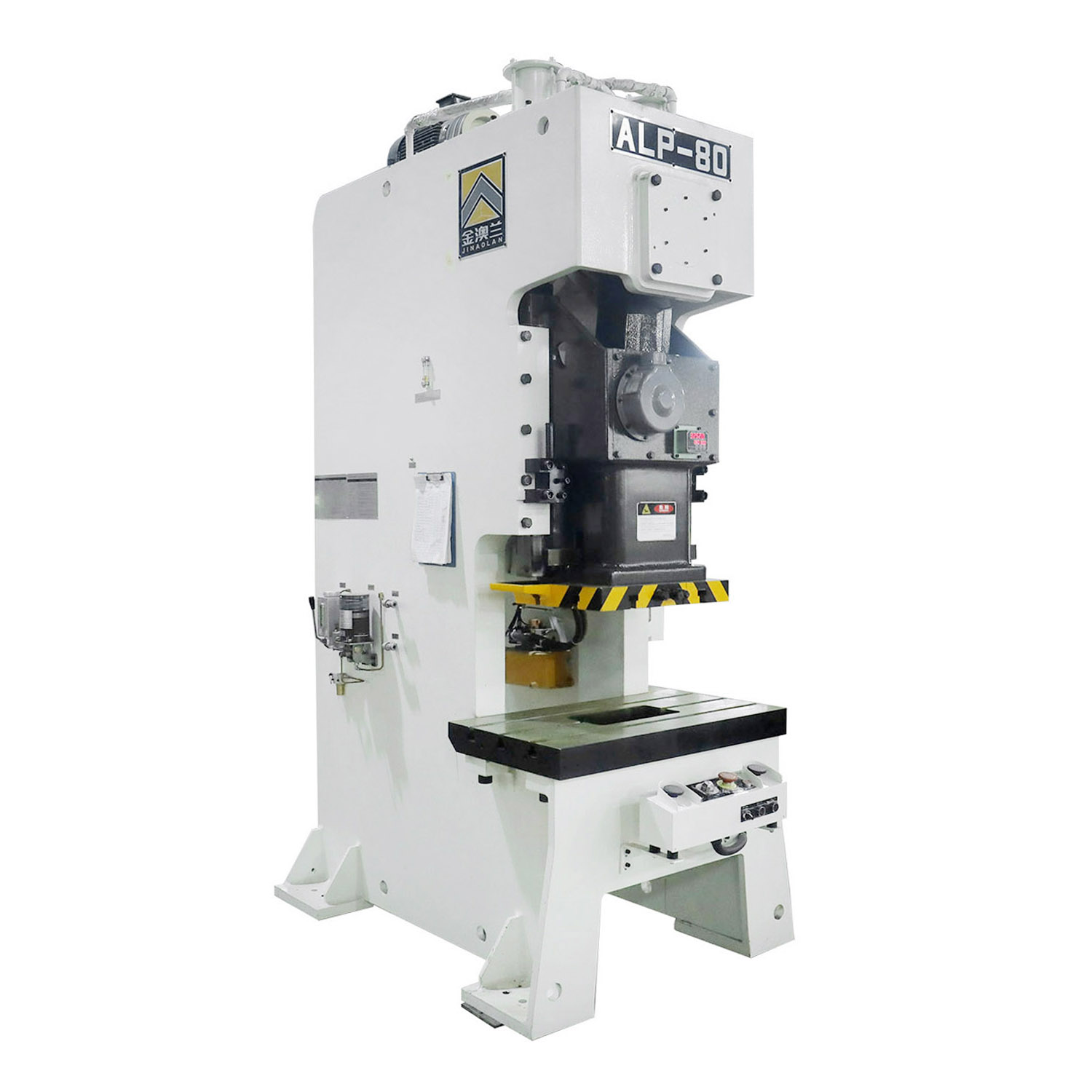

The most stark contrast between these two designs is accessibility. A gap-frame offers three-sided access. An H-frame restricts access to narrow side windows and the front/rear openings. This accessibility directly impacts setup time. Facilities with frequent die changes see significant labor reductions with open-gap machines. Forklifts or die carts can approach from multiple angles, driving right up to the bolster plate. Fasteners and clamps are easy to reach without leaning into a dark, enclosed die space. For a job shop performing three or four changeovers daily, this speed is a massive operational advantage.
Off-center loads affect H-frame and gap-frame presses differently. H-frame presses provide better stability because the four-column structure supports the ram from all corners and reduces lateral movement. Gap-frame presses are more sensitive to uneven loading, which can increase stress on the frame and guide system. Large, heavy-duty stamping applications usually require H-frame presses, while gap-frame presses are better suited for smaller components and compact production needs. Choosing the right structure helps maintain accuracy, reduce tool wear, and prevent part defects.
Evaluate the footprint-to-tonnage ratio. Gap-frame machines pack significant punching power into a very small footprint. This makes them highly attractive for cellular manufacturing integration. You can group multiple small presses together to create a lean production line. An H-frame of similar tonnage requires a much larger footprint and often a taller ceiling clearance. Facility integration is simpler with gap-frames. They rarely require specialized foundation pits or massive overhead cranes for installation. You can lag them directly to a standard reinforced concrete floor using heavy-duty isolation mounts.
Feature | C-Frame (Open-Gap) | H-Frame (Straight Side) |
|---|---|---|
Accessibility | Excellent (Three-sided access) | Restricted (Pillars block access) |
Rigidity & Deflection | Moderate (Prone to angular gaping) | High (Minimal deflection) |
Footprint | Compact (No pit required) | Large (Often requires foundation work) |
Ideal Production Run | High-mix, low-volume (HMLV) | Low-mix, high-volume |
Tooling Complexity | Single station, simple progressive | Complex, multi-station progressive |
Off-Center Load Capacity | Poor to Fair | Excellent |
Production variability dictates equipment selection. Gap-frames favor high-mix, low-volume (HMLV) environments. Operational flexibility is the primary driver here. A single machine might punch brackets in the morning and coin tokens in the afternoon. The inherent speed of the ram maximizes throughput for diverse, short-run contracts. Dedicated high-volume lines, stamping the exact same part millions of times, benefit more from the rigid, low-wear environment of a straight-side press. You deploy gap presses when agility matters more than brute, continuous force.
Manual feeding ergonomics are vastly superior on an open-gap press. Operators do not have to reach around heavy steel pillars. Visibility of the tooling area is excellent, reducing fatigue and improving quality control. Automation integration is straightforward. Robotics, coil feeds, and automated part-ejection systems fit easily within the machine envelope. You can mount a servo feeder on one side, a scrap conveyor on the back, and leave the front open for maintenance access without spatial conflicts.
The inherent deflection of a gap-frame impacts tooling lifespan. Tight-tolerance carbide tooling is brittle. If the press frame gapes under load, the punch and die will misalign slightly. This chips the carbide and destroys the tool. You must match die design to the press frame. If you must run high-precision parts on a C Frame Power Press, utilize heavily guided dies. Massive guide pins and ball bearing bushings inside the die set will absorb some of the lateral forces. This internal die guidance protects the cutting edges from the press's angular deflection, shifting the alignment burden from the press gibs to the die shoe.
A practical way to reduce frame gaping is to avoid running the press at full capacity. Maintaining a safety margin, such as using a larger press than the required tonnage, helps reduce deflection and extends equipment life. Installing tonnage monitors can detect overload conditions and stop the machine when limits are exceeded. For demanding applications, tie-rod modifications can improve frame rigidity while maintaining the flexibility of an open-gap design.
Maintenance requirements depend on the drive system. Mechanical presses need regular checks of clutches, brakes, flywheels, lubrication points, and safety timing. Hydraulic presses require monitoring of cylinders, pressure levels, and oil condition. Regardless of the system type, early signs such as unusual vibration, abnormal noise, oil leaks, or excessive guide wear should be addressed quickly to prevent equipment damage and downtime.
The three-sided open design presents unique safety challenges. Operators have multiple points of access to the danger zone. Strict safety integrations are mandatory. Light curtains must cover the primary operator working area. You can configure these for Presence Sensing Device Initiation (PSDI) if local regulations allow, speeding up manual operations. Two-hand controls ensure the operator's hands are clear of the tooling before the ram descends. Hard guarding, such as polycarbonate shields or steel mesh, must block access to the sides and rear of the die space. Meeting OSHA and ANSI standards requires a comprehensive approach to guarding the entire open envelope.
Evaluating equipment investments requires looking at resource allocation and facility impact. The upfront footprint and installation requirements of a gap-frame are generally lower than a comparable-tonnage straight-side press. This lower barrier to entry frees up resources for better tooling, QDC systems, or automation equipment. The long-term versatility provides ongoing operational value. A single machine can handle a massive variety of part geometries and materials. This adaptability ensures the machine rarely sits idle, maximizing your shop floor utilization rates.
Return on investment calculations should factor in labor hours saved and machine uptime. Measure the exact time it takes to change a die on a closed-frame press versus an open-gap press. Implement Single-Minute Exchange of Die (SMED) principles. Multiply those saved minutes by your shop's labor rate, and then by the number of changeovers per year. The efficiency gains compound rapidly. The ability to bid on diverse, short-run contracts increases your production schedule density. The faster you can set up a job, the more competitive your facility becomes for small-batch manufacturing.
Here are the actionable next steps for your facility:
Audit your current production runs to identify the frequency of die changeovers and the average tonnage required.
Calculate the exact off-center loading and required bed-to-ram parallelism for your most complex dies to rule out deflection risks.
Measure your available floor space to determine if a compact gap-frame layout enables a more efficient cellular manufacturing flow.
Consult with a press manufacturer to run a specific tonnage monitor test on your heaviest application before finalizing equipment selection.
A: The standard range falls between 10 and 250 tons. Structural physics limit higher tonnages because the open-front design acts as a lever. Pushing beyond 250 tons usually causes unacceptable angular deflection. While rare custom models exist up to 400 tons, they require massive steel reinforcement that negates the space-saving benefits.
A: Yes, but only for short or simple progressive dies. The limited bed length restricts the number of stations. The inherent angular deflection under load can cause binding or uneven wear in long, tight-tolerance progressive tooling. H-frames are heavily preferred for complex progressive work.
A: Gaping is caused by the physics of the open-front design. When the ram presses down on the workpiece, equal force pushes up against the press frame. Without front pillars to hold the structure together, the upper half of the frame bends slightly upward and backward under peak tonnage.
A: A C-frame features an open front and sides, providing excellent accessibility for operators and rapid tool changes. An O-frame, or straight-side press, has a closed-ring structure with four corner pillars. The O-frame offers superior rigidity and zero angular deflection but restricts access to the tooling area.
A: Hydraulic presses are generally better for deep drawing. They can deliver full, constant force throughout the entire stroke length. Mechanical presses only reach maximum tonnage at the very bottom of the stroke, which can tear the metal during deep, continuous drawing operations.
A: These presses must be securely anchored to prevent walking due to operational vibration. They are typically bolted to a reinforced concrete pad using heavy-duty anchor bolts. Vibration isolation mounts or specialized leveling pads are often installed between the press feet and the floor to absorb shock.