
Views: 0 Author: Site Editor Publish Time: 2026-02-10 Origin: Site


Power Press machines are at the heart of modern manufacturing, combining massive force with remarkable efficiency. They help factories speed up production, reduce waste, and maintain consistent quality across every part. Whether you’re shaping metal, stamping components, or running multi-stage operations, these presses adapt to diverse materials and workflows. Advanced features like servo control, automation integration, and intelligent interfaces make operations smoother and safer. If you’re looking to boost output while keeping costs down, exploring the capabilities of Power Press technology is a must for any forward-thinking manufacturer.
Modern power presses can deliver massive tonnage despite a smaller footprint. This compact design saves valuable factory space, allowing for more machines on the floor or better workflow layout.
Even in tight production areas, manufacturers achieve high-capacity stamping, punching, and forming operations without sacrificing power.
Benefits of compact high-force presses:
Maximize factory floor utilization
Handle heavy-duty tasks efficiently
Reduce material handling distances
Improve production line flexibility
| Feature | Benefit | Application |
|---|---|---|
| Compact footprint | Saves floor space | Small factories, flexible layouts |
| High tonnage | Heavy forming | Automotive panels, large metal parts |
| Efficient workflow | Shorter material paths | Multi-station production lines |
Servo-driven presses allow variable speed and force for each stroke. You can adjust settings for different materials, from thin aluminum to thick steel, without changing machines.
They provide unparalleled flexibility, enabling manufacturers to handle diverse part geometries and reduce trial-and-error setups. Fine-tuned control improves repeatability and minimizes scrap.
Servo advantages:
Variable speed and force control
Supports different material types
Reduces errors and scrap
Adapts to multiple production tasks
Operator safety is crucial. Modern presses include light curtains, two-hand controls, and overload protection to prevent accidents.
They stop immediately if a part or hand enters the danger zone, ensuring compliance with workplace safety standards. These features reduce injuries and protect expensive tooling and workpieces.
Safety highlights:
Light curtain sensors for automatic stops
Two-hand activation for controlled operation
Overload protection for press and tooling
Meets global safety regulations
Touchscreens and advanced control panels make setup and monitoring simple. Real-time diagnostics show machine health, usage data, and maintenance alerts.
Operators can quickly adjust stroke, speed, and die settings. Predictive data helps maintenance teams fix small issues before they become major problems.
UI advantages:
Touchscreen operation simplifies setup
Real-time machine diagnostics
Quick changeovers and programming
Supports predictive maintenance
Servo-driven motors consume power only during active strokes, reducing energy costs. Less heat generation also protects internal components, extending machine lifespan.
Many modern presses include energy-saving modes and regenerative systems, helping factories lower their environmental footprint while maintaining high productivity.
Sustainability benefits:
Reduced electricity usage
Less machine wear and heat buildup
Longer operational lifespan
Supports greener manufacturing
Power press machines are built for speed. They operate continuously, which drastically shortens cycle times and boosts output. Automation helps handle large production volumes without extra manual labor. Operators can focus on monitoring instead of repetitive tasks, reducing fatigue.
Industries such as automotive, electronics, and appliance manufacturing benefit the most. For example, car body panels, circuit boards, and metal housings can be stamped rapidly in high volumes.
Key advantages of high-speed presses:
Continuous operation for maximum throughput
Reduced human effort and errors
Faster project completion
Ideal for large-scale manufacturing
| Industry | Typical Application | Cycle Benefit |
|---|---|---|
| Automotive | Car body panels | 30-50% faster production |
| Electronics | PCB stamping | Precise and repeatable |
| Appliances | Metal housings | High-volume output |
They deliver controlled stroke length, force, and position. Every part comes out almost identical, cutting down errors and scrap. This precision is crucial for delicate components like aerospace parts or small electronic devices.
They maintain uniform pressure during the entire stroke, so no part gets under- or over-formed. Repeatable accuracy also improves quality control and reduces rework.
Why precision matters:
Maintains consistent product quality
Reduces defective units
Essential for thin or brittle materials
Power presses optimize cutting, punching, and forming to reduce scrap. Intelligent layout planning ensures raw materials are used efficiently, saving money. They often run energy-efficient operations, lowering power costs while keeping productivity high.
Some machines allow programmable layouts for each batch, so manufacturers can maximize material usage. Small adjustments in stroke or feed reduce excess waste without slowing production.
Material-saving benefits:
Optimized die patterns
Minimal scrap generation
Reduced energy consumption
Lower overall production cost
Modern power presses often connect to robotic loaders, automatic die changers, and PLCs. This setup enables “lights-out” manufacturing, where machines operate unmanned for hours. Real-time sensors and diagnostics help predict maintenance needs before breakdowns occur.
Automation also improves safety by keeping operators away from moving parts while maintaining consistent production rates.
Automation highlights:
Robotic feeding and unloading
Automatic die adjustments
Predictive maintenance alerts
Seamless integration with CNC controls
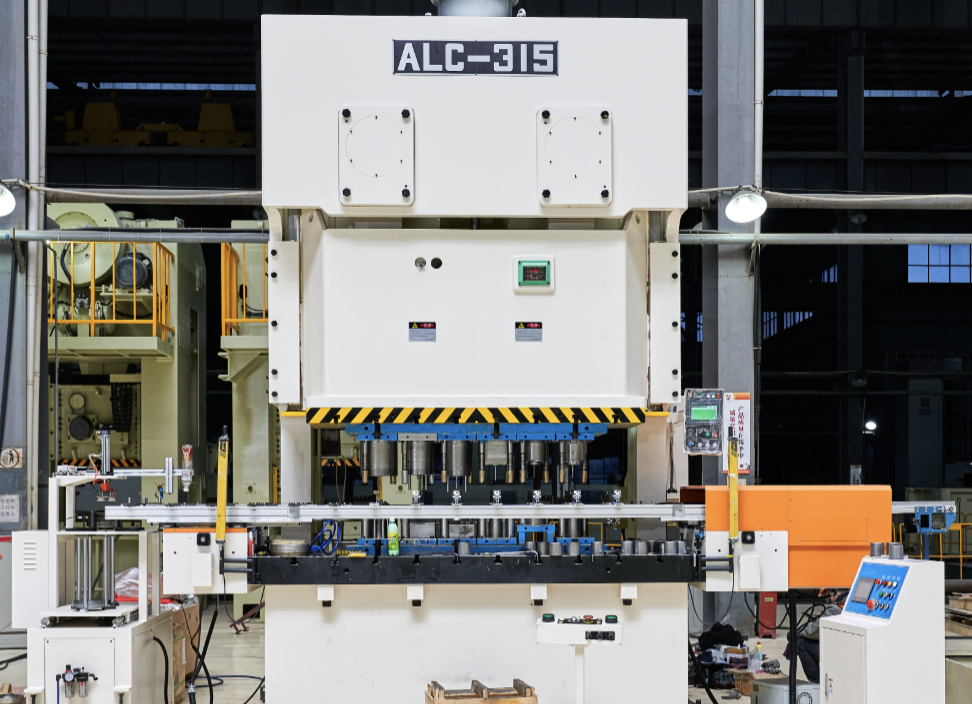
Different metals respond differently under power press operations. Aluminum bends easily but can dent if the press is too fast. High-strength steel needs precise force to prevent cracking. Copper and brass require slower strokes to avoid springback.
Understanding material behavior helps prevent defects and improves repeatability. Adjusting stroke speed, force, and die clearance ensures consistent results across batches.
Material behavior examples:
| Material | Press Consideration | Common Application |
|---|---|---|
| Aluminum | Light force, fast strokes | Automotive panels |
| Steel | High force, slower strokes | Structural components |
| Copper/Brass | Gentle forming | Electrical contacts |
| Titanium | Controlled speed | Aerospace parts |
We can reduce cycle times without stressing dies by fine-tuning stroke parameters. Shorter cycles for ductile metals, slower strokes for brittle alloys. Balancing speed and force protects tooling and improves throughput.
Preventative adjustments extend die life, reducing downtime for maintenance or replacements. Regular monitoring ensures every batch runs efficiently.
Optimization tips:
Adjust stroke speed for material type
Monitor die pressure continuously
Schedule predictive maintenance
Track production metrics for improvement
Tooling quality directly impacts efficiency. High wear-resistant dies last longer and reduce scrap. Quick-change dies allow rapid switchovers between production batches, minimizing downtime.
Proper lubrication, alignment, and surface treatment also extend tooling lifespan. Investing in durable tools pays off in consistent performance.
Tooling best practices:
Use hardened steel or coated dies
Implement quick-change systems
Check alignment regularly
Maintain proper lubrication
Modern power presses can handle multiple operations in one workcell. Stamping, coining, and embossing can occur sequentially without moving the part to another machine.
This reduces handling time, improves precision, and lowers labor requirements. Multi-stage operations also allow for smaller factory footprints.
Benefits of multi-stage presses:
Fewer material transfers
Consistent alignment and tolerances
Lower labor and handling costs
Increased throughput per shift
Simulation tools predict material flow, force distribution, and potential defects before production. Engineers can test different die designs and press settings digitally, saving time and reducing waste.
Virtual trials help fine-tune stroke, feed, and layout, ensuring optimal performance when the machine starts running.
Simulation advantages:
Reduces scrap and setup errors
Accelerates time-to-market
Enables virtual testing for multiple materials
Optimizes production layout and tooling
Power presses lower operational costs significantly. Automated cycles reduce manual labor, letting one operator handle multiple machines. Less human intervention also reduces fatigue and errors.
Advanced presses minimize material waste by ensuring precise cuts and consistent stamping. Energy-efficient servo motors consume power only during active strokes, lowering electricity bills and cooling requirements.
Key cost-saving factors:
Fewer operators needed per production line
Reduced scrap and rework
Lower energy consumption
Longer die life and fewer replacements
| Factor | Impact | Example |
|---|---|---|
| Labor | Reduced payroll | Single operator manages multiple presses |
| Scrap | Less wasted material | Accurate stamping and punching |
| Energy | Lower electricity bills | Servo-driven motor efficiency |
| Tooling | Extended lifespan | Durable, wear-resistant dies |
Modern power presses complete operations faster than traditional mechanical systems. Continuous or multi-stage operations shorten cycle times without compromising quality.
Higher output per shift means businesses can meet large orders quickly. Faster production cycles also free up capacity for new projects or smaller batch runs.
Productivity benefits:
Continuous operation reduces downtime
Multi-stage pressing in a single cell
Rapid changeovers for different parts
Increased output per operator
By combining speed, precision, and automation, power presses allow companies to launch products faster. Accurate and consistent components reduce rework, enhancing customer satisfaction.
Faster delivery times and better quality give manufacturers an edge in competitive industries such as automotive, electronics, and aerospace.
Strategic advantages:
Reduced lead times for new products
Consistent product quality across batches
Ability to handle urgent or high-volume orders
Strengthened market reputation
| Advantage | Business Impact | Example Industry |
|---|---|---|
| Faster time-to-market | Outpace competitors | Automotive parts, consumer electronics |
| High quality | Fewer returns, better reviews | Aerospace components, precision tools |
| Flexibility | Adapt to urgent orders | Electronics, small-batch manufacturing |
| Reputation | Stronger client trust | Industrial suppliers, OEMs |
A: With regular lubrication, alignment checks, and die care, a quality power press can last 15–20 years or more.
A: Yes, modern presses with servo motors, PLC control, and advanced sensors provide high accuracy, suitable for delicate components in electronics and aerospace.
A: Aluminum and copper require lighter strokes, steel and titanium need higher force, while servo presses adapt to multiple metals and alloys efficiently.
A: Automation reduces manual labor, shortens cycle times, ensures repeatable quality, and enables unmanned “lights-out” production for higher throughput.
Investing in high-efficiency Power Press machines can transform your production line. They offer faster cycles, precise output, and smarter material use, giving your factory a clear competitive edge. With automation and predictive maintenance, downtime drops and productivity climbs, making each shift more valuable.
At Zhejiang Jinaolan Machine Tool Co., Ltd., we provide robust, versatile presses designed to meet modern manufacturing demands. Experience how our Power Press solutions combine strength, intelligence, and efficiency to elevate your operations today.