
Views: 0 Author: Site Editor Publish Time: 2026-02-11 Origin: Site


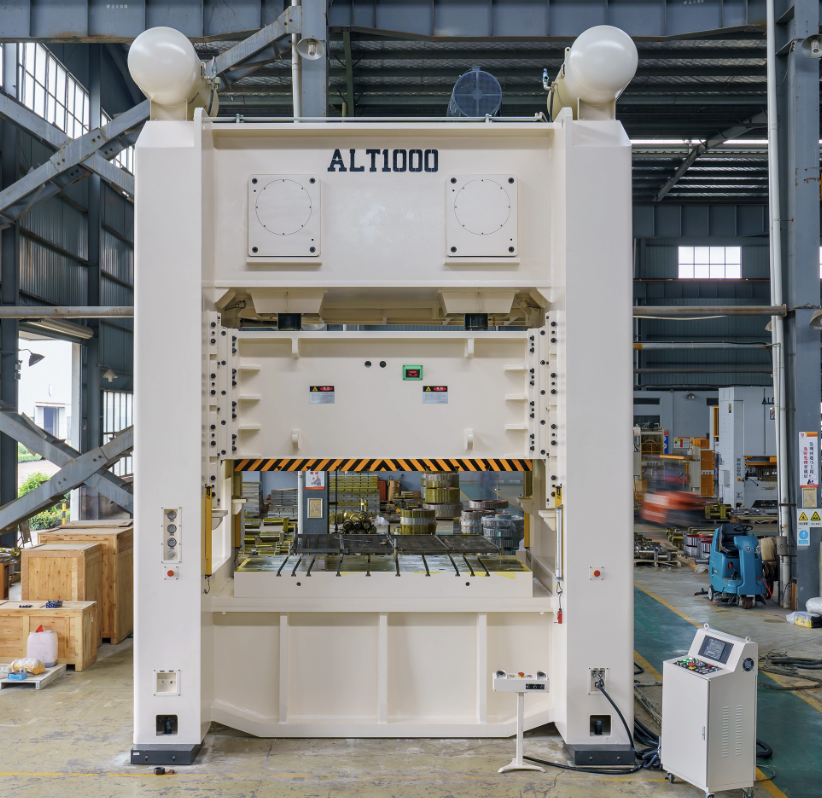
H Frame Power Press systems play a critical role in modern manufacturing, but choosing the right frame design is not always simple. Many buyers compare H-frame presses and C-frame presses without fully understanding how structure, tonnage, accuracy, and workspace needs affect real production results. In this guide, we break down the key differences in a clear, practical way. We help you decide which press fits your materials, floor layout, safety needs, and long-term production goals—without unnecessary complexity.
A hydraulic press machine is an industrial machine designed to apply controlled compressive force to a material. It uses hydraulic fluid pressure to shape, form, press, bend, or assemble parts. Manufacturers rely on it because the force stays smooth, consistent, and highly controllable. In simple terms, it helps turn raw materials into usable components—accurately and efficiently.
Hydraulic presses operate based on Pascal’s Law.
Here’s the idea:
Pressure applied to a confined fluid spreads evenly in all directions.
A small force can create a much larger force.
The system multiplies input force without losing control.
In practice:
The pump pressurizes hydraulic oil.
The oil pushes the piston.
The piston drives the ram downward.
The material gets pressed against a die or work surface.
It’s powerful, predictable, and repeatable.
Hydraulic presses appear across many industries because they handle different materials and force levels.
Common applications include:
Automotive manufacturing – stamping, forming, assembly
Metal fabrication – bending, straightening, deep drawing
Electrical and electronics – component pressing
Aerospace – precision forming of structural parts
Home appliances – panel forming and part assembly
General manufacturing – maintenance and workshop use
They scale easily, from small workshops to automated production lines.
The frame structure is not just the shape—it defines how the press behaves under load.
Frame design affects:
Force distribution across the machine
Deflection during high-pressure operations
Alignment between ram and tooling
Operator safety and machine stability
C-frame presses use a single-column, open-throat structure. It gives clear visibility and easy access, but the frame can flex under load. H-frame presses rely on a double-column or four-post structure. It distributes force evenly and keeps the frame stable. This difference matters for safety and precision. When loads rise, H-frames stay aligned, while C-frames may twist slightly.
C-frame presses are typically chosen for light-duty work. They handle lower tonnage tasks like punching, small stamping, and forming. H-frame presses are built for heavy-duty operations. They support much higher tonnage and continuous production. If your process demands consistent force at high loads, they are the safer choice. Tonnage requirements often decide the frame before any other feature.
Frame rigidity directly affects accuracy. C-frame presses can experience deflection when tonnage increases. That deflection may impact part tolerance and tool life. H-frame presses resist bending due to their symmetric structure. They keep alignment under load, helping parts stay consistent. For tight tolerances, rigidity becomes a big advantage.
C-frame presses offer three-sided access. Operators like it for quick loading, unloading, and die changes. It speeds up setup in small batch work. H-frame presses usually provide front access only. They feel more enclosed, but automation fits better. When ergonomics matter more than force, C-frames often win.
C-frame presses fit compact workshops. They need less floor space and lighter foundations. Installation stays simple. H-frame presses require more room and stronger foundations. They suit large production floors and fixed layouts. Planning space early avoids costly changes later.
C-frame presses usually cost less upfront. Maintenance stays lower due to simpler structures. H-frame presses require higher initial investment. Operating costs may rise, but performance scales better. The choice depends on workload, not just budget.
| Factor | C-Frame Press | H-Frame Press |
|---|---|---|
| Frame design | Single-column | Double-column / four-post |
| Typical tonnage | Low to medium | Medium to very high |
| Deflection risk | Higher at load | Minimal |
| Access | Three-sided | Front access |
| Space needs | Compact | Larger footprint |
| Cost focus | Lower upfront | Higher performance |
The first step is understanding how much force your process needs. We usually estimate pressing force based on material type, thickness, and contact area. It doesn’t stay complicated for long. Most suppliers confirm calculations during selection.
C-frame presses work well for light to medium tonnage. They perform reliably inside rated limits. Push them beyond capacity, and issues start showing up. Frame deflection increases. Tool life drops. Safety margins shrink.
H-frame presses handle higher tonnage more comfortably. Their balanced structure distributes force evenly. It keeps alignment stable during heavy or repeated pressing cycles.
Material size plays a big role in press choice. Small parts and thin materials suit C-frame presses. They offer easy loading and clear sightlines. Setup stays quick.
Large or thick workpieces change the picture. H-frame presses support wider dies and taller tooling stacks. They also tolerate uneven loading better. When tooling weight increases, rigidity becomes more important than access.
Available floor space often limits options early. C-frame presses fit compact workshops well. They install quickly and rarely need special foundations. Moving them later stays simple.
H-frame presses require more room. They also need stronger floors and fixed positioning. In exchange, they support structured layouts and predictable workflows. Shorter material paths often improve efficiency more than speed upgrades.
Low production volumes usually favor C-frame presses. Manual operation feels natural. Adjustments happen fast. Operators stay close to the process.
High-volume production leans toward H-frame presses. They integrate easily into automated lines. Conveyors, feeders, and robots align better around the frame. When uptime matters, automation-ready design saves effort every shift.
Safety starts at the frame design. C-frame presses remain safe when loads stay controlled. Exceed limits, and risk rises quickly.
H-frame presses provide higher structural stability. It reduces deflection and unexpected movement. Many industries also require compliance certifications. Look for presses meeting ISO, CE, or local safety standards.
| Selection Factor | C-Frame Presses | H-Frame Presses |
|---|---|---|
| Typical tonnage range | Low to medium | Medium to very high |
| Part size support | Small to medium | Medium to large |
| Floor space needs | Compact | Larger footprint |
| Automation capability | Limited | Strong |
| Safety margin | Load-sensitive | High rigidity |
Both presses need basic, regular care. We check hydraulic oil, seals, hoses, and filters often. Clean oil keeps pressure stable. Lubrication reduces wear on slides and pins.
C-frame presses feel easier to maintain. They have fewer structural parts. H-frame presses take slightly more time. Extra columns and guides need inspection. Still, routines stay simple once set.
C-frame presses concentrate stress around the open throat. Over time, it may flex. Alignment issues appear first. Tool wear increases faster.
H-frame presses spread force across two sides. Stress stays balanced. Wear shows on columns, bushings, and guide rails. They handle off-center loads better.
C-frame presses last long under light workloads. They suit low-cycle jobs. Heavy use shortens service life quickly.
H-frame presses suit high-tonnage, continuous work. They handle long shifts better. Proper maintenance extends lifespan even under demanding production.
A: A C-frame press works better. It uses less floor space and allows easy part access.
A: Not really. It suits light to medium loads. Heavy work risks frame deflection.
A: Often yes. Its rigid structure controls alignment under high tonnage.
A: C-frame presses. They have fewer components and simpler inspections.
A: Match material thickness, die size, and safety margin. Avoid running at maximum capacity.
Choosing between an H-frame press and a C-frame press depends on how you work, not just what you produce. Light-duty tasks, fast setups, and limited space often favor C-frame designs. Heavy loads, tight tolerances, and automation-ready lines usually point toward H-frame solutions. The right match improves consistency, protects tooling, and reduces long-term costs.
At Zhejiang Jinaolan Machine Tool Co., Ltd., we design and manufacture reliable hydraulic and power press solutions for diverse industries worldwide. If you’re planning your next press investment, our engineering team can help you select or customize a solution that fits your tonnage, layout, and production targets—confidently and efficiently.