
Views: 0 Author: Site Editor Publish Time: 2026-02-11 Origin: Site


Choosing the right H Frame Power Press is a key decision for any workshop or production line. The right press affects forming accuracy, safety, efficiency, and long-term operating costs. In this guide, we walk through how to choose an H-frame press based on tonnage, frame design, applications, and manufacturer support. Whether you handle heavy-duty metal forming, bearing installation, or precision straightening, this article helps you evaluate options clearly and avoid common buying mistakes.
Choosing a press frame is not just about machine shape. It directly affects how much force the press can handle, how accurate each operation is, how much floor space it needs, and how well it performs over time. Among common press designs, the H-frame press offers a strong balance of strength, stability, and versatility, especially when compared with C-frame and four-column presses.
An H-frame press uses two vertical uprights connected by a rigid horizontal beam. This closed structure keeps the frame balanced during operation and helps the ram move in a straight line. A C-frame press, by contrast, has an open-sided design that allows easy access to the work area but provides less structural support under load.
H-frame presses are designed for medium to very high tonnage. They handle heavy loads with less frame stress and better long-term durability. C-frame presses are typically limited to lighter loads, and higher tonnage increases the risk of frame flex or fatigue.
| Feature | H-Frame Press | C-Frame Press |
|---|---|---|
| Typical tonnage | Medium to very high | Low to medium |
| Structural strength | High | Limited |
| Heavy-duty suitability | Excellent | Poor to moderate |
Because of their symmetrical frame design, H-frame presses resist deflection more effectively. The force stays aligned through the ram and bed, which helps maintain pressing accuracy. C-frame presses tend to flex on the open side when loads increase, which can reduce precision and tool life over time.
H-frame presses work best for tasks such as straightening shafts, pressing large bearings, forming thick materials, and other heavy-duty operations. C-frame presses are better suited for small parts, light assembly, and jobs where quick access and frequent part loading are required.
Four-column presses use four guide columns to distribute force evenly across a large working area. They are ideal for applications requiring high parallelism. H-frame presses focus force along a strong central line, making them highly effective for straight-line pressing tasks where concentrated force is needed.
Four-column presses usually require more floor space and a more complex installation process. H-frame presses have a more compact footprint and simpler installation, making them easier to integrate into workshops or production lines with limited space.
Four-column presses generally come with higher initial costs and more components that require alignment and maintenance. H-frame presses are typically more cost-effective, with fewer guiding parts and simpler maintenance routines, which helps reduce downtime.
| Factor | H-Frame Press | Four-Column Press |
|---|---|---|
| Floor space required | Moderate | Large |
| Installation complexity | Low | High |
| Initial cost | Lower | Higher |
| Maintenance effort | Easier | More complex |
An H-frame press is a strong choice for operations that require repeated high-force cycles. Its rigid frame maintains alignment even under continuous heavy use, making it reliable for demanding industrial environments.
The wide spacing between uprights allows H-frame presses to handle large or thick workpieces with ease. This makes them suitable for straightening plates, forming heavy components, and pressing oversized parts.
H-frame presses apply force in a controlled, vertical direction with minimal side loading. This makes them ideal for bearing installation, press-fit assemblies, shaft straightening, and other applications where straight-line force and accuracy are critical.
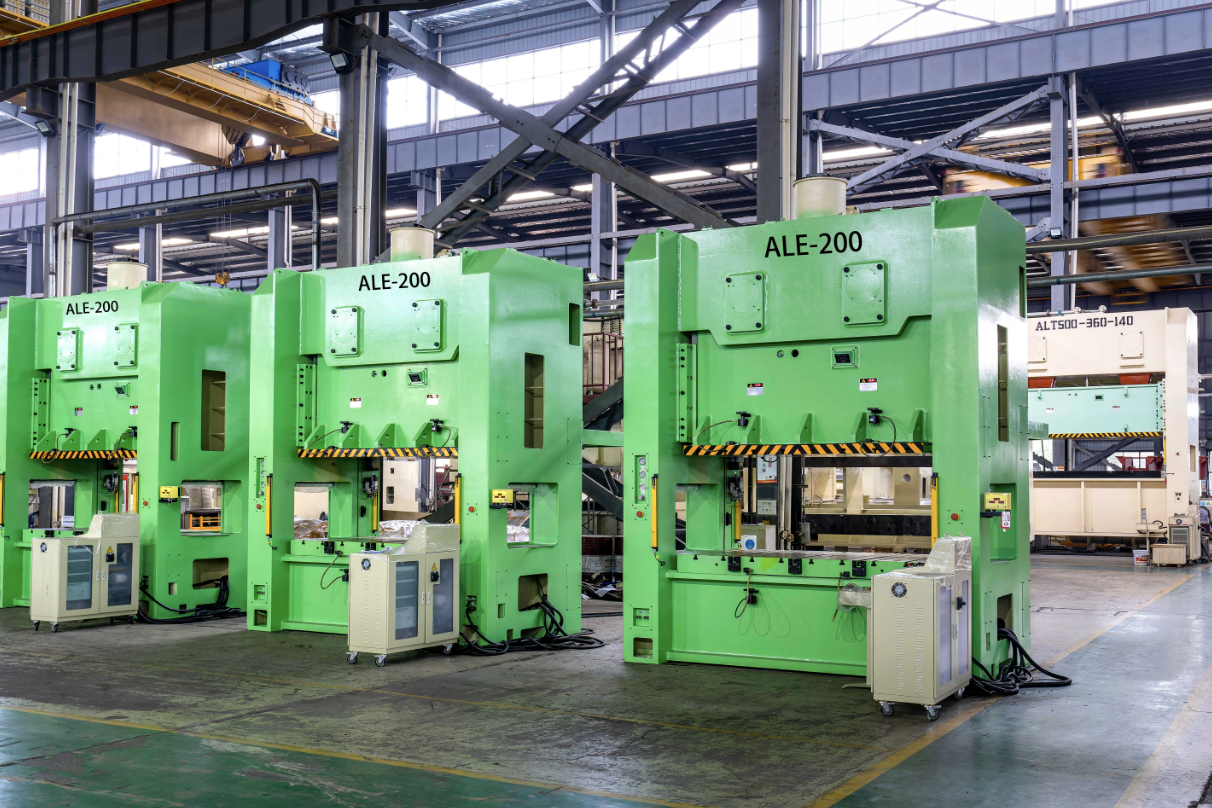
Choosing an H-frame press works best when you break the decision into clear steps. We usually start with capacity, since tonnage defines what the press can safely and consistently handle. Getting this part right avoids damage, downtime, and poor results later.
Press tonnage describes how much force the machine can apply. One ton equals roughly 2,000 pounds of force. It sounds simple, but real pressing jobs add several variables.
Material thickness plays a big role. Harder or thicker materials resist force more. Tooling design also matters. A small contact area needs more pressure in the same spot. Stroke length and pressing speed influence load behavior too.
Overloading a press causes problems fast. The frame may flex. Seals wear early. Accuracy drops. In extreme cases, parts fail suddenly. They cost more than choosing the right tonnage from the start.
Different jobs place very different demands on an H-frame press. We always recommend matching capacity to the toughest task you run, not the easiest one.
Metal forming and bending need higher tonnage as thickness increases
Straightening shafts and plates requires steady force across the stroke
Bearing installation and removal needs controlled pressure, often higher than expected
Punching and pressing assemblies depends on material hardness and die size
| Application | Typical Tonnage Range |
|---|---|
| Light forming or assembly | 20T – 30T |
| Bearing work and straightening | 40T – 60T |
| Heavy forming and thick plates | 80T – 150T |
| Industrial heavy-duty tasks | 200T and above |
They don’t all behave the same. It’s better to size for the hardest job.
Choosing extra capacity improves flexibility. It lets the press run cooler and last longer. Operators feel more control during difficult presses.
Most workshops add a safety margin of 20–30%. That margin protects the frame and hydraulic system. It also allows future jobs without replacing equipment.
Common capacity choices include:
20T for light workshop tasks
50T for general maintenance and bearing work
100T for heavy forming and straightening
200T+ for industrial production and thick materials
We often see buyers regret going too small. Very few regret having more capacity than planned.
Many buyers focus on the press itself and miss the bigger picture. Small mistakes during selection often lead to poor performance, higher costs, and early replacement. These issues show up again and again across workshops and factories.
This is the most common problem we see. Buyers calculate tonnage based on one light task. Then real work begins. The press struggles. Accuracy drops. Components wear fast. Material hardness changes everything. Tooling size matters too. A press running near its limit every day never lasts long.
| Issue | What Happens |
|---|---|
| Too little tonnage | Frame stress, slow cycles |
| Running at max load | Faster wear, leaks |
| No safety margin | Limited future use |
They usually end up upgrading sooner than planned.
Many workshops grow. Jobs change. New materials arrive. A press chosen only for today’s work becomes a bottleneck tomorrow. Adding extra capacity gives room to adapt. It supports heavier parts and new tooling later. We see fewer regrets when buyers plan two or three steps ahead.
Low price attracts attention. It often hides compromises in frame strength, hydraulics, or controls. Cheaper presses may flex more. They lose accuracy faster. Maintenance costs rise quietly over time. Initial savings disappear quickly once downtime starts.
An H-frame press still needs room. Upright spacing, bed height, and stroke all affect layout. Some presses look compact on paper. They feel large on the floor. Power matters too. Hydraulic units need stable electrical supply. Manual systems trade speed for simplicity. Ignoring these details slows installation and daily operation.
Every press needs service eventually. Seals wear. Hoses age. Controls need tuning. Limited support turns small issues into long delays. Spare parts availability matters more than many expect. Reliable manufacturers keep machines running. Poor support leaves them idle.
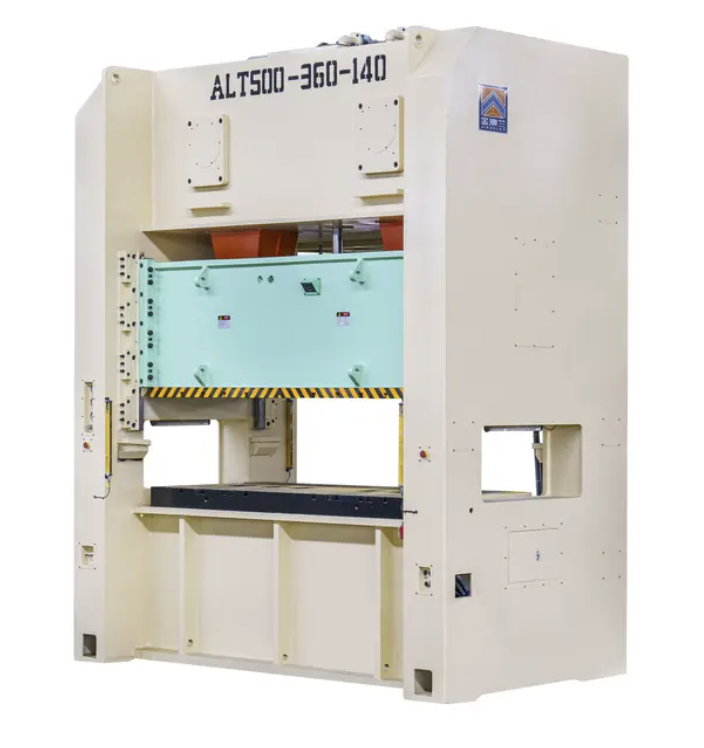
Choosing an H-frame press is only half the decision. The manufacturer behind it determines quality, consistency, and long-term value. We often see reliable presses backed by companies with deep experience, strong engineering teams, and proven global service capability.
Manufacturing experience shapes every part of a press. Frame rigidity, weld quality, machining accuracy, and hydraulic stability all improve through decades of production.
Manufacturers founded early usually carry stronger process control. They understand heavy-load behavior. They know how presses fail in real factories. Companies like KINGLAN, established in 1983, built this knowledge through continuous production and technology upgrades.
Long-term experience also supports large-tonnage manufacturing. Facilities designed for heavy presses need height, crane capacity, and proper testing infrastructure. These conditions cannot be created overnight.
No two pressing applications look exactly the same. Strong manufacturers offer engineering-driven customization instead of fixed configurations.
Customization may include:
Frame size and structural reinforcement
Stroke length and shut height
Control systems and intelligent software
Integration with feeding systems or automation
Engineering teams matter here. KINGLAN’s technical staff includes experienced engineers and senior specialists who support press line planning, automation integration, and production efficiency improvement.
| Custom Capability | Practical Benefit |
|---|---|
| Structural design | Handles real load conditions |
| Automation support | Improves output consistency |
| Control software | Enhances safety and accuracy |
Every press needs maintenance over its lifetime. Cylinders, valves, seals, and electrical components eventually require replacement.
Manufacturers who build presses at scale usually maintain spare part systems. They support faster delivery and clearer documentation. KINGLAN’s large production base and standardized manufacturing help ensure long-term parts availability across different press models.
Limited spare parts access often causes long downtime. Buyers feel the impact years after purchase.
Certifications demonstrate production discipline. They confirm controlled processes rather than one-off builds.
Important standards include:
ISO 9001 quality management systems
Export compliance and CE-related requirements
In-house inspection and testing procedures
KINGLAN passed ISO9001 certification early and operates as a national high-tech enterprise. These standards support consistent press quality across 25-ton to 2400-ton mechanical press ranges and related production lines.
A: Yes. Its symmetrical frame resists deflection, keeping force aligned and accuracy stable under load.
A: Hydraulic presses use pumps and valves. Electric hydraulic models add servo control for better energy efficiency and precision.
A: With proper sizing and maintenance, they often run 15–20 years or more in industrial use.
Choosing an H-frame press is ultimately about balancing force, accuracy, space, and long-term reliability. When tonnage is properly sized and the frame structure matches your real applications, daily operations become smoother, safer, and more predictable. Thinking ahead—rather than only solving today’s task—often makes the biggest difference in press performance and lifespan.
With decades of manufacturing experience, Zhejiang Jinaolan Machine Tool Co., Ltd. supports users beyond the machine itself, offering engineering insight, customization, and stable long-term service. If your goal is consistent output and dependable heavy-duty pressing, working with an experienced press manufacturer can turn the right equipment choice into lasting production value.