
Views: 0 Author: Site Editor Publish Time: 2026-11-25 Origin: Site


A quick die change system helps a stamping team move, locate, and secure dies with fewer manual adjustments between jobs. For high-mix production, the right configuration is one that works across the dies you change most often, fits the press and its surroundings, and reduces the time from the last good part of one job to the first approved part of the next.
Start with three questions. Which dies account for most changeovers? Which stopped task takes the most time? Which press and die interfaces can be standardized? The answers determine whether to specify quick clamps, add lifters and transfer equipment, or integrate the full exchange sequence.
Time die transport, positioning, clamping, setup, and first-piece approval separately. If clamp adjustment is the main delay, a clamp upgrade may be enough. If the press regularly waits for a crane or a shared die cart, changing the clamps alone will leave that delay in place.
System scope | When to evaluate it | What to verify |
|---|---|---|
Quick clamps and standardized locating points | Die movement is already reliable, but fastening and positioning take too long | Clamp engagement, die shoe height range, and location repeatability |
Clamps, lifters, and die arms or a cart | Moving the die onto or off the bolster accounts for much of the stop | Support along the full travel path, transfer height, and clearance |
Powered transfer with integrated controls | Frequent exchanges justify coordinating handling, positioning, and clamp status | Equipment interfaces, sequence verification, and recovery after an interrupted exchange |
Group dies by press, change frequency, and tooling interface. A small group of tools may account for most weekly changes even if the plant has a large die inventory. Start the compatibility review with those tools, then add the heaviest, smallest, and least accessible dies that the system is expected to handle.
For example, the heaviest die may determine the cart capacity. The shortest die shoe may determine roller spacing because it has to remain supported while crossing the gap between the cart and bolster. A die that is rarely used may warrant a separate handling method if bringing it into the common system would require extensive rework.
Record the upper and lower die shoe dimensions, clamping ledge heights, and usable engagement surfaces. Compare them with the slide and bolster slot patterns and the space available to move each clamp into position. Check how clamp force and placement will be verified for the proposed tooling and production loads.
Ask the supplier for a compatibility matrix that shows which dies fit as supplied, which need approved modifications, and which require a separate setup. Where die shoe dimensions vary, compare the cost of standardizing the interface with the cost of adjustable clamps. Include the extra setup and verification work that remains with each option.
Review the entire path from the staging position to the die’s final location on the bolster. Check support heights, rail spacing, transfer direction, load distribution, and clearance near the feeder, scrap conveyor, and guarding. Use both die weight and center of gravity when reviewing the proposed handling arrangement.
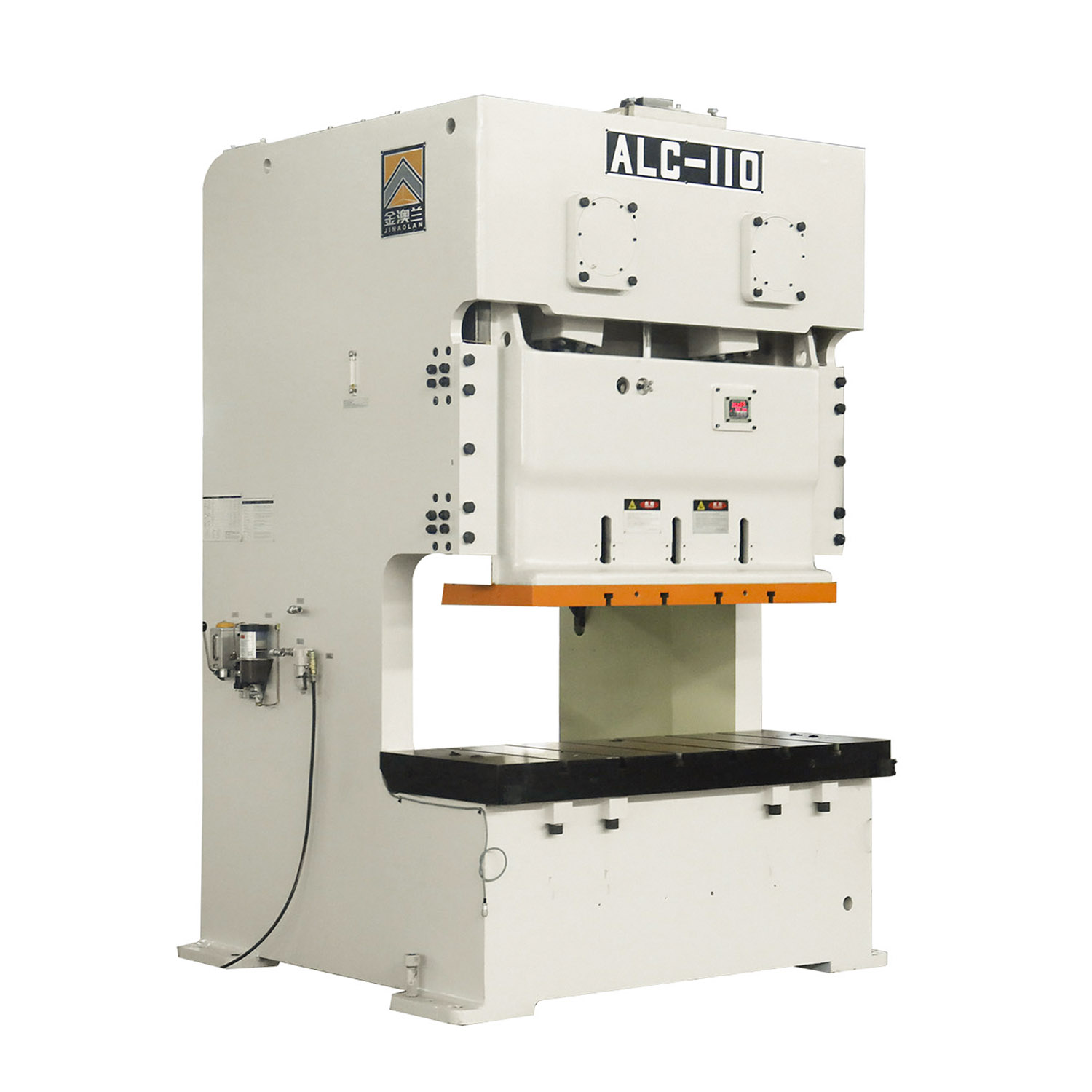
Confirm how the die is located and seated at the end of travel. The system must support the die during the exchange and allow it to seat correctly for production. For a cart shared across several presses, verify alignment and compatibility at each press before assuming it can serve the whole line.
For an existing press, provide the model, bolster and slide drawings, controls information, and a layout of nearby equipment. Ask who will verify the mechanical fit, integrate the controls, and validate the approved setup and restart sequence. Define how the system will confirm die position and clamp status, and how trained personnel will recover from a stopped exchange under the site’s machine-specific safeguarding and hazardous energy control procedures.
KINGLAN lists optional quick die change equipment, including die lifters, clamps, and die arms, on its ALC Series mechanical press and ALF single-crank closed press pages. Ask for the configuration and compatibility limits of the specific model in your quotation.
 |  |
A high-mix shop can gain more from a modest improvement on a frequently changed die family than from a large improvement on a tool changed once a month. Estimate the number of changes for each family, multiply by the expected minutes saved per change, and total the results. Use the time from the last good part to the first approved part as the main measure.
Suppose a system saves 12 minutes on 18 changes per week. Over 48 operating weeks, it recovers about 173 hours of press availability. If the press is a bottleneck and each recovered hour delivers $150 in additional contribution, the illustrative annual benefit is about $25,900 before recurring costs. Recovered time has less financial value when demand or downstream capacity prevents the plant from using it.
Include clamps, lifters, die arms or carts, controls integration, installation downtime, die modifications, training, and maintenance when comparing quotations. Ask each supplier to identify the tasks that will still be manual, including material changes, feed setup, and first-piece inspection.
If the press is regularly ready before the correct coil or inspection gauge arrives, include those delays in your baseline. That will help you separate savings the equipment can deliver from savings that depend on staging or process changes.
Include the following information in your request for quotation:
Press and layout: Model, bolster and slide drawings, slot patterns, die loading direction, and available floor space.
Die inventory: Weight, footprint, shoe dimensions, clamping ledge heights, and change frequency by die family.
Existing equipment: Crane, cart, rollers, feeder, transfer devices, and controls that will remain in use.
Current performance: Total changeover time and the minutes spent waiting, moving, locating, clamping, setting up, and approving the first piece.
Required deliverables: Compatibility matrix, equipment and modification scope, installation responsibilities, and proposed acceptance criteria.
Select a frequently changed die, a heavy or large die, and a die with a different clamping interface if the system will handle one. Test the complete exchange using the intended staffing and approved procedures. Record physical exchange time separately from setup and first-piece approval, then compare the total with the baseline.
Agree on how to verify seating, location, and clamp engagement before the trial. Track startup rejects and repeat the test where practical to check consistency. For systems with integrated controls, include an agreed test of how the line identifies and recovers from an interrupted exchange. This gives engineering and procurement a common basis for accepting the system.
It can include clamps, die lifters or rollers, locating devices, die arms or a cart, and controls for coordinating or verifying the exchange. The scope depends on which tasks need improvement and which equipment can be reused.
A common interface can make setup more repeatable, but a system can accommodate different die shoes if the approved clamping ranges, locating arrangements, and support conditions are defined. Verify each die family against the proposed equipment.
A retrofit may be possible after checking the bolster and slide, available mounting points, die shoes, handling clearances, and controls. Ask the supplier to identify required press and tooling modifications before pricing the installation.
Evaluate a powered cart when frequent exchanges or a demanding transfer path make die movement a recurring bottleneck. Compare the proposed cart with your current handling method using the actual die weights, travel distances, and staging layout.
Measure the full time from the last good part to the first approved part, along with die transfer time, positioning and clamping checks, and startup rejects. Use representative dies so the results reflect the mix the system will handle in production.
Discuss your quick die change project with KINGLAN. Share your press model, bolster drawing, die weights and shoe dimensions, weekly change frequency, and a breakdown of your current changeover time. Include any feeder, guarding, or floor-space constraints that affect the loading path.


