
Views: 0 Author: Site Editor Publish Time: 2026-11-19 Origin: Site


A die changeover is the process of switching a stamping press from one die and production setup to another. It includes removing the outgoing die, installing and securing the incoming die, restoring the feed and press settings, and approving the first acceptable part from the next job.
To make a die changeover faster, measure the time from the last good part of the outgoing job to the first approved part of the incoming job. Then identify where the press spends the most time waiting. If the delay comes from finding tools or waiting for inspection, improve preparation first. If moving and clamping the die takes most of the time, evaluate quick die change equipment.
Start the clock when the outgoing job produces its last acceptable part. Stop it when the first acceptable part from the new setup is approved under your normal inspection process. If the line still needs adjustments before reaching its planned rate, track that ramp-up separately. This shows whether the changeover is shorter and whether production returns to its target rate sooner.
Measure several representative changes across different die sizes, jobs, and shifts. Record when the press is stopped and when the team is actively working. For example, ten minutes spent waiting for a crane calls for a different improvement from ten minutes spent moving the die.
Changeover activity | Common source of delay | What to record |
|---|---|---|
Prepare the next job | Die, coil, setup tools, or gauges arrive late | Which item was missing and how long the press waited |
Remove and install the dies | Shared handling equipment, alignment corrections, or limited access | Waiting time, transfer time, and positioning time separately |
Secure the die and restore the setup | Mixed clamp arrangements or missing setup values | Time spent on clamping, connections, and settings |
Run and approve the first piece | Repeated feed adjustments or inspection delays | Trial strokes, rejected pieces, and time to approval |
Keep the same start and stop points before and after any improvement. Timing only the physical die exchange can hide delays in coil threading, feed adjustment, or inspection that still keep the press from producing saleable parts.
Single-Minute Exchange of Die, or SMED, separates external setup, which can be completed safely while the current job is running, from internal setup, which requires the press to stop. The first opportunity is often to move preparation out of the downtime window.
Before the current batch ends, verify the next die number and revision, stage the correct material and rated handling equipment in approved areas, and prepare the clamps, connectors, gauges, and inspection sheet. Retrieve the approved setup values for the incoming job and assign responsibility for first-piece approval. A short readiness check can catch missing items while the press is still producing.
Use a setup sheet for each die or die family. Include the press and die identification, approved setup values, feed pitch, lubrication requirements, clamping locations, and first-piece inspection points. Where compatible dies use different clamp heights or connections, assess whether standardizing those interfaces would reduce setup work and errors.
Assign roles and handoffs in advance. One person may verify the material and settings outside the work area while qualified personnel perform the physical die change under the approved procedure. Coordinate simultaneous work only where the site procedure permits it and the tasks do not create overlapping hazards.
Physical die removal and installation must follow the site’s machine-specific procedure and applicable requirements for hazardous energy control and safeguarding. Plan the isolation, verification, and restart steps into the standard sequence. Keep the required controls in place when timing a changeover or trialing new equipment.
A quick die change system can shorten repetitive handling, positioning, or clamping tasks. Start with the activity that accounts for the most stopped time. If dies move slowly across the bolster, assess die lifters and the transfer path. If the crew spends time repositioning clamps, review the die shoe and clamp interface. If the longest delay is first-piece inspection, focus on gauge readiness and the approval process.
Equipment or feature | What it helps with | What to verify |
|---|---|---|
Die lifters | Raising the die shoe off the bolster for transfer | Die weight, load distribution, bolster compatibility, and seating after lowering |
Die arms or a die cart | Supporting or transporting the die during loading and unloading | Rated capacity, support height, transfer direction, and floor space |
Quick clamps | Reducing repeated fastening and adjustment | Clamp force, die shoe height, engagement points, and clamp status verification |
Locators and stops | Positioning compatible dies consistently | Die interface dimensions, positioning repeatability, and clearance |
Stored setup recipes | Reducing time spent finding and entering settings | Which values can be stored, who approves changes, and how settings are verified at restart |
Start with the heaviest, largest, and most frequently changed dies. Check die shoe dimensions, clamping surfaces, handling direction, and the load rating of each element in the transfer path. Include floor space for the cart or crane route, as well as clearance around the feeder, scrap equipment, and guarding.
 |  | 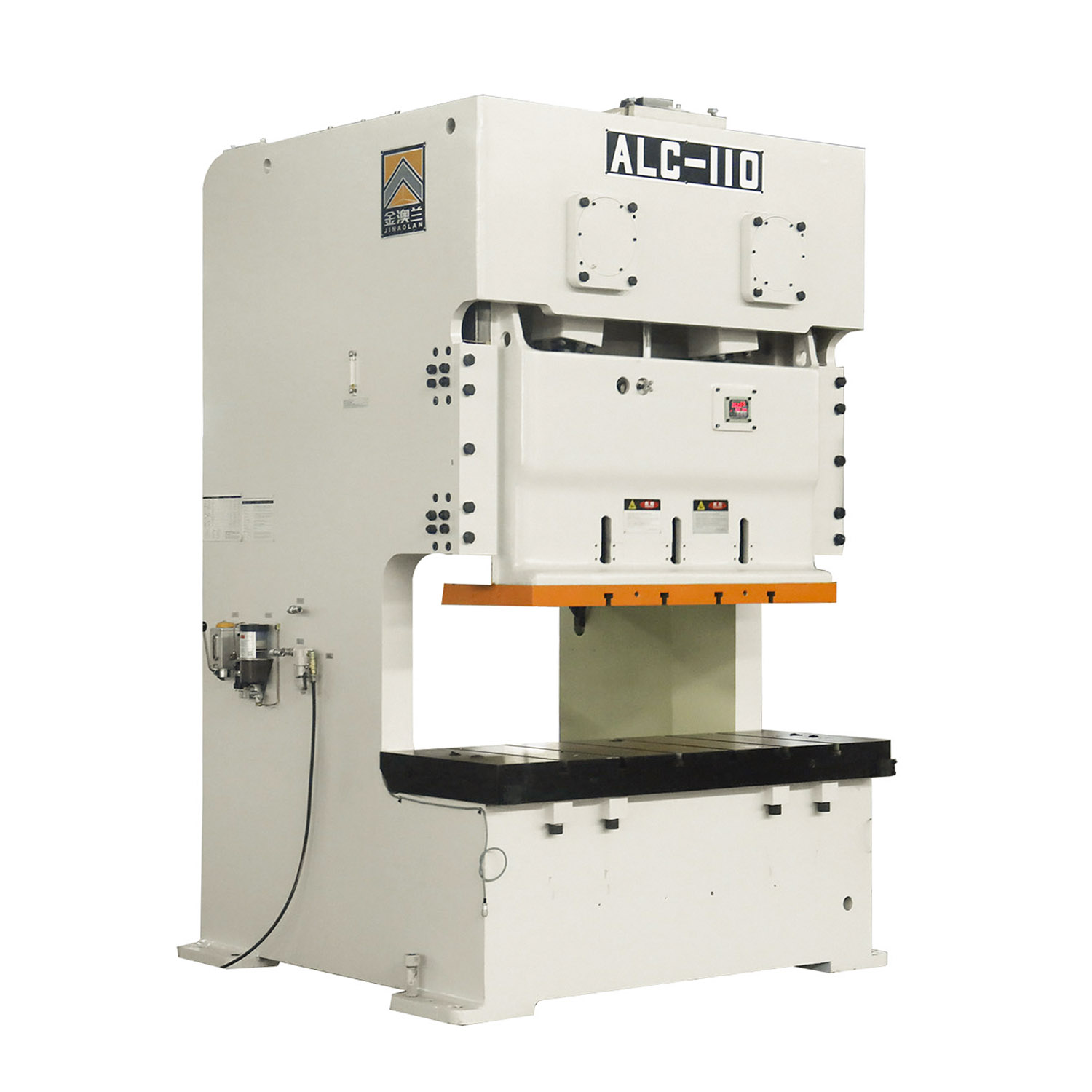 |
KINGLAN lists quick die change options on its ALC Series double-crank mechanical press and ALF single-crank closed press pages. The options identify components such as die lifters, clamps, and die arms. Confirm what is included for the specific press model and die sizes in your project.
Multiply the average minutes saved per changeover by the number of changes in the period. For example, reducing a changeover from 40 to 25 minutes saves 15 minutes. At eight changes per week, that recovers two hours of press availability per week. This is an illustrative calculation. The value of those hours depends on demand and whether the press is a production bottleneck.
Track the spread as well as the average. If most changes take 25 minutes but certain dies take 45, compare those jobs by handling method, clamp layout, feed setup, and inspection requirements. The difference can reveal a die family that needs a separate setup standard or hardware review.
Use the same acceptance criteria before and after the change. Check part identity, material, and the critical dimensions specified on the inspection sheet. Depending on the job, include burr direction, forming depth, surface marks, or other features affected by setup.
Record total changeover time, trial strokes, and rejected parts until approval. If the die exchange is faster but startup scrap increases, review alignment, feed settings, and first-piece checks before approving the new method. For an equipment trial, include representative dies and agree on the timing method, staffing, and inspection process in advance.
Die setting covers placing, securing, and adjusting the die and associated equipment for operation. A changeover also includes preparing the next job, ending the outgoing run, restoring the new production setup, and obtaining first-piece approval.
Observe several changes and record time by activity. Identify which delays occur while the press is stopped and which tasks can be completed safely in advance. Then address the largest recurring delay.
SMED starts by reorganizing setup work. Teams can often save time through better staging, standard settings, and clearer handoffs. Quick clamps, lifters, or transfer equipment are worth evaluating when physical handling or clamping remains a major delay.
A retrofit may be possible after reviewing the press, bolster, die shoes, die weights, clamping surfaces, and controls. The layout must also accommodate the handling route, safeguarding, and the approved setup and restart procedures.
Use representative dies and measure from the last good part of one job to the first approved part of the next. Record transfer time, clamping and setup time, trial strokes, and startup rejects. This shows where the equipment saves time and what still limits the full changeover.
Planning a new press or looking to reduce setup time on an existing line? Discuss your die changeover requirements with KINGLAN. Share your press model, bolster dimensions, die weights and shoe dimensions, changeover frequency, and the steps that currently take the most time.


