
Views: 0 Author: Site Editor Publish Time: 2026-08-24 Origin: Site


Metal stamping facilities face intense pressure to maximize floor space utilization, improve operator safety, and handle higher-tensile materials without expanding their physical footprints. Traditional coil handling processes often bottleneck these operational goals. Conventional setups rely on sprawling, separate units that demand deep looping pits, complex synchronization across multiple controllers, and extensive material handling time. These mechanical disconnects lead to severe inefficiencies, increased scrap rates, and heightened safety risks during manual threading.
To resolve these bottlenecks, plant architectures are shifting toward highly integrated solutions. The 3-in-1 decoiler straightener feeder represents a fundamental change in how stamping lines process raw coils. By consolidating uncoiling, leveling, and feeding into a single coordinated chassis, facilities can reclaim valuable square footage while tightening precision. We will evaluate how this integrated architecture compares directly against traditional separate coil line equipment, providing a rigorous technical breakdown to guide your next facility upgrade.
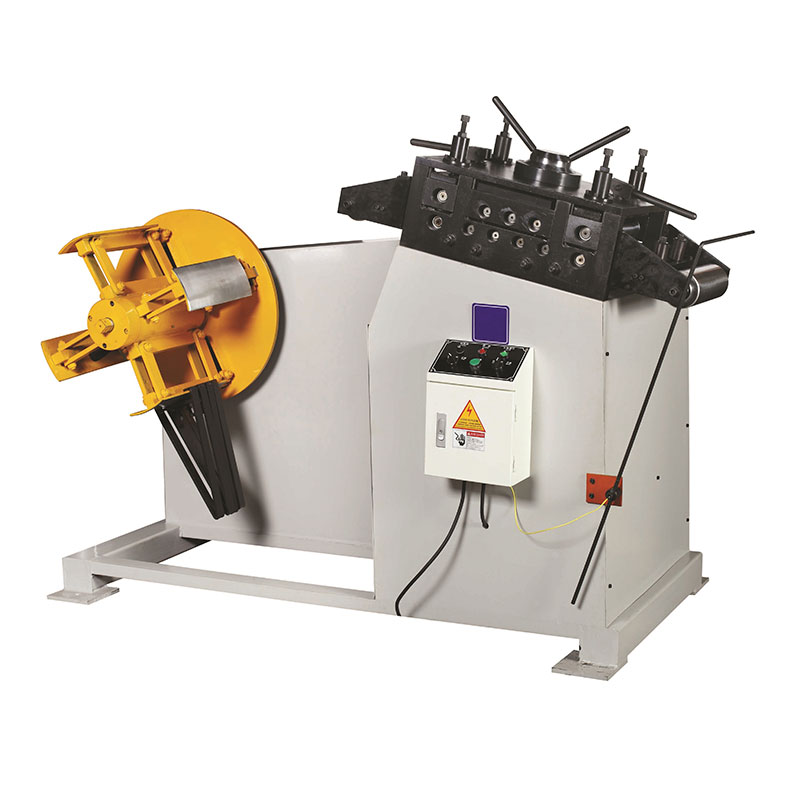
Footprint Reduction: 3-in-1 systems can condense line length to as little as 4.5 meters, eliminating the need for costly looping pits required by separate units.
Precision & Synchronization: Unified servo controls in 3-in-1 systems eliminate the communication lag between standalone decoilers, straighteners, and feeders, ensuring higher accuracy in high-speed stamping.
Operational Risk: Integrated systems introduce a "single point of failure" dynamic; if one component requires maintenance, the entire feed line halts, necessitating stricter preventative maintenance protocols than modular setups.
Table of Contents
Modern stamping operations require strict adherence to performance metrics. Plant managers evaluate coil lines based on floor space return on investment, changeover speed, material leveling accuracy, and operator safety. As production demands increase, the limitations of legacy equipment become highly visible on the shop floor. Traditional coil handling relies on a segmented approach. An uncoiler holds and unwinds the material. A separate straightener removes the coil set. Finally, a standalone servo feeder pushes the material into the press. This fragmented architecture creates significant operational drag.
The mechanical disconnect between standalone uncoilers, levelers, and servo feeders forces facilities to build looping pits. These pits accommodate the material slack required to prevent the feeder from pulling directly against the uncoiler's brake. Excavating and reinforcing these pits incurs heavy civil engineering expenses. Furthermore, exposed coil loops present severe safety hazards. Operators must manually thread heavy, sharp-edged steel through multiple independent stations. This manual intervention increases changeover times and exposes workers to pinch points and laceration risks.
To understand the baseline requirements for modern stamping, we evaluate success criteria across several operational fronts:
Changeover Velocity: The time required to remove a depleted coil, load a new one, thread the material, and achieve the first good part.
Material Flatness: The ability to remove coil set and crossbow, ensuring the material feeds smoothly through progressive dies without jamming.
Feed Accuracy: Maintaining exact progression lengths stroke after stroke, preventing pilot pin breakage and die crashes.
Floor Space Utilization: The ratio of revenue-generating press equipment to non-revenue-generating support machinery.
The integrated architecture fundamentally redesigns this workflow. It merges uncoiling, leveling, and servo feeding into a single, coordinated chassis. This design eliminates the intermediate material loops entirely. You must differentiate a true integrated system from intermediate 2-in-1 setups. A 2-in-1 system combines the decoiler and straightener but still pairs them with a separate feeder, maintaining the need for a material loop. The fully integrated approach removes this requirement, transitioning the line from a multi-PLC setup to a centralized control interface. One human-machine interface manages the entire material flow, reducing communication lag and simplifying operator input.
Space constraints dictate equipment selection in almost every modern manufacturing facility. A standard separate coil line requires a massive linear footprint. When you account for the uncoiler, the straightener, the required looping pit, and the feeder, the total line length easily stretches between 10 and 15 meters. This sprawling setup consumes premium shop floor space that could otherwise house active production equipment.
Conversely, a compact integrated system drastically condenses this footprint. By eliminating the looping pit and mounting the leveling and feeding mechanisms on the same chassis as the uncoiler, the entire line length shrinks to roughly 4.5 to 5 meters. This footprint reduction provides immense operational flexibility. Facilities can reclaim floor space to install secondary operations, add automated packaging stations, or even integrate entirely new press lines within the existing building envelope.
Feature | Separate Coil Line Equipment | Integrated 3-in-1 System |
|---|---|---|
Linear Footprint | 10 to 15 meters | 4.5 to 5 meters |
Looping Pit Requirement | Mandatory for material slack | Completely eliminated |
Control Architecture | Multiple PLCs, separate HMIs | Single centralized PLC and HMI |
Material Threading | Manual threading across stations | Automated hands-free threading |
Synchronization | Prone to latency and mismatch | Closed-loop servo synchronization |
Precision in metal stamping relies on exact feed lengths and consistent leveling. Separate units struggle with synchronization. Matching the speed of a standalone decoiler to a standalone straightener and feeder introduces latency. Each machine relies on its own drive system and controller. When the press demands material, the feeder pulls, the straightener reacts, and the uncoiler adjusts its brake. This chain reaction creates micro-delays. Over thousands of strokes, these calibration challenges lead to inconsistent feed lengths, causing die crashes or out-of-tolerance parts.
Integrated systems solve this through closed-loop servo synchronization. A single centralized controller governs the uncoiler mandrel, the straightener rolls, and the pinch rollers. When the press signals a feed requirement, all components react simultaneously. The straightener feeds material at the exact rate the servo feeder demands. This unified control ensures exact feed lengths and consistent leveling pressure. For progressive die stamping, where tolerances are measured in hundredths of a millimeter, this synchronization prevents material slippage and guarantees part accuracy.
Equipment must handle diverse material specifications without compromising speed or safety. Separate units often struggle when transitioning between extreme thickness variations. Threading a 0.8mm aluminum coil requires entirely different tension settings than a 9.0mm high-strength steel coil. Manually adjusting three separate machines for these changeovers consumes hours of production time.
An advanced 3-in-1 decoiler straightener feeder excels across wide material thickness ranges. These systems easily process materials from 0.8mm up to 9.0mm. They are specifically engineered to handle Advanced High-Strength Steels (AHSS). AHSS possesses massive yield strength and severe coil set. Separate straighteners often lack the rigidity to flatten these materials without slipping. Integrated straightener-feeders apply consistent, synchronized pressure across hardened work rolls, forcing the material past its yield point to achieve perfect flatness without surface marring.
Industry-specific use cases highlight these capability thresholds. Automotive manufacturing increasingly mandates integrated systems. Automotive structural components require thick, high-tensile materials stamped at high speeds. Separate lines simply cannot maintain the required tension and precision. Additionally, integrated systems easily accommodate optional upgrades. Automatic shearing machines can be mounted directly to the chassis, allowing operators to crop the leading and trailing edges of heavy coils automatically, further streamlining the production cycle.
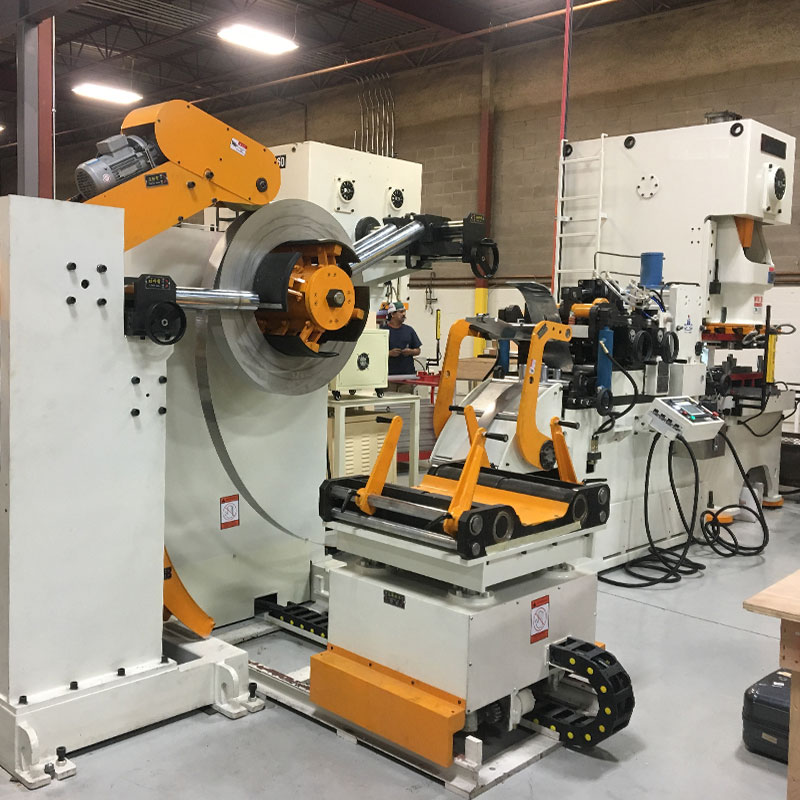
Procuring a premium integrated coil handling system requires a higher upfront investment than purchasing standard modular units. The advanced servo motors, centralized PLC architecture, and heavy-duty unified chassis drive up the initial procurement. However, evaluating equipment solely on initial purchase ignores the massive operational savings generated over the machine's lifecycle.
Integrated systems drastically reduce energy consumption. A traditional setup relies on three separate motors running independently, often fighting against each other due to tension mismatches. An integrated unit utilizes one centralized drive system, optimizing power draw and reducing overall electrical load. Furthermore, synchronized feeding lowers scrap rates. Precise material placement prevents misfeeds, saving massive amounts of wasted raw material. Labor hours also plummet. Automated threading and centralized controls reduce coil changeover times from forty-five minutes to under ten minutes, directly increasing press uptime.
Long-term maintenance overhead heavily favors integration. Servicing one unified chassis and a single electrical cabinet requires significantly fewer labor hours than maintaining three distinct mechanical and electrical systems. Parts inventory shrinks, and troubleshooting becomes highly localized.
Separate units carry substantial hidden installation expenses. Excavating a looping pit requires concrete cutting, soil removal, structural reinforcement, and specialized safety grating. This civil engineering work disrupts plant operations and adds massive infrastructure overhead. Additionally, wiring three separate electrical cabinets and establishing communication protocols between different machine brands extends commissioning downtime.
Integrated compact feed lines offer a plug-and-play deployment model. They require minimal foundation work. Because the system does not need a looping pit, riggers can place the machine directly on a standard reinforced concrete floor. The centralized electrical system requires only one primary power drop and a single communication link to the press. This streamlined installation process allows facilities to move from delivery to full production in a fraction of the time required for modular setups.
Consolidating equipment introduces specific operational risks. The primary drawback of integration is the creation of a single point of failure. If the straightener mechanism in an integrated unit suffers a catastrophic bearing failure, the entire feed line goes down. Production halts completely until the specific component is repaired.
Separate units offer a theoretical modular advantage. If a standalone servo feeder fails, maintenance teams can unbolt it, move it off the line, and swap in a spare feeder while the decoiler and straightener remain operational. This modularity provides a safety net for facilities with extensive spare equipment inventories. However, this advantage rarely materializes in modern lean manufacturing environments, where keeping spare heavy machinery on standby is highly inefficient.
Certain manufacturing environments still benefit from separate units. Highly custom, variable production lines sometimes require extreme distances between uncoiling and feeding. For example, lines integrating secondary washing stations, specialized inspection loops, or complex pre-punching operations may need the physical space provided by a decoupled setup.
Integrated systems are rigid by design. You cannot easily decouple the straightener from the feeder if production requirements drastically change. If a facility suddenly needs to insert a 10-meter chemical bath between the uncoiler and the press, the integrated chassis cannot accommodate this without severe, custom modifications. Plant engineers must carefully forecast future production methods before committing to a rigid, unified architecture.
Transitioning from manual, segmented controls to an advanced, unified human-machine interface presents a significant learning curve. Veteran operators accustomed to manually jogging a slack loop and physically threading material often resist automated systems. They may struggle to trust the closed-loop synchronization, leading to improper parameter inputs or unnecessary manual overrides.
Mitigating this adoption hurdle requires structured vendor training. Do not rely solely on internal knowledge transfer during the initial deployment. Mandate comprehensive, hands-on training sessions led by the equipment manufacturer. Develop standardized operating procedures specifically for automated threading and parameter selection. Create quick-reference guides for different material thicknesses, ensuring operators understand how the centralized PLC reacts to tension adjustments.
To neutralize the single-point-of-failure risk, facilities must implement rigorous, schedule-based maintenance protocols. Run-to-failure strategies will devastate production schedules when operating integrated machinery. Maintenance teams must shift to proactive monitoring and strict adherence to service intervals.
Specific maintenance focal points demand regular attention. Gear lubrication must remain consistent to prevent backlash in the straightener rolls. Servo motor calibration should be verified quarterly to ensure feed length accuracy does not drift. Straightener roll cleaning is critical; any debris buildup on the unified rolls will imprint directly onto the material, causing immediate quality rejections. Implementing vibration analysis on the main drive bearings can predict failures weeks before they cause unplanned downtime.
A standard preventative maintenance schedule for an integrated line includes:
Daily: Inspect straightener rolls for debris, verify pneumatic pressure levels, and check safety interlocks.
Weekly: Lubricate drive gears, inspect the mandrel expansion mechanism, and clean the HMI touchscreen.
Monthly: Verify servo motor belt tension, inspect electrical cabinet cooling fans, and check hydraulic fluid levels.
Quarterly: Perform a complete feed length calibration test and conduct vibration analysis on primary bearings.
The integrated coil handling architecture provides a definitive advantage for modern stamping facilities. By eliminating looping pits, centralizing control systems, and automating material threading, these systems drastically improve operational efficiency. While separate units remain viable for highly specialized layouts or operations requiring extreme distance between processes, the integrated approach dominates in environments prioritizing space utilization, high-speed precision, and long-term operational savings.
When shortlisting equipment, base your decision matrix on facility constraints and material demands. If your plant floor is crowded, or if you process thick, high-tensile automotive materials, integration is the logical path. If you run thin, highly flexible materials through custom secondary processes, modular units may still serve your needs.
For manufacturers looking to upgrade their stamping lines with more efficient and automated coil handling solutions, Kinglan brings industry experience in metal forming and press automation equipment, supporting a range of production requirements across modern manufacturing environments. With solutions designed around productivity, precision, and reliable material handling, Kinglan helps manufacturers build more streamlined stamping and coil processing workflows.
To move forward with upgrading your coil handling capabilities, execute the following steps:
Conduct a floor space audit to measure the exact square footage currently consumed by existing looping pits and separate machinery.
Calculate the labor hours lost to manual coil threading and extended changeovers over the past quarter.
Request a detailed efficiency comparison model from an equipment manufacturer based on your specific material thickness and press speed requirements.
Evaluate your maintenance department's capacity to implement strict, schedule-based preventative maintenance protocols for integrated machinery.
A: A traditional separate coil line, including the mandatory looping pit, typically requires 10 to 15 meters of linear floor space. An integrated system consolidates all components onto a single chassis, reducing the total footprint to approximately 4.5 to 5 meters, saving massive amounts of valuable shop floor area.
A: No. Integrated systems completely eliminate the need for a looping pit. The closed-loop servo synchronization perfectly matches the uncoiling speed with the feeding speed, removing the need for material slack and saving facilities from expensive civil engineering and excavation work.
A: A 2-in-1 combo integrates only the decoiler and straightener, requiring a separate servo feeder mounted at the press and an intermediate material loop. A fully integrated system combines all three functions into one unified machine, eliminating all material loops.
A: Yes. Advanced integrated systems are specifically engineered to process heavy-duty materials, including Advanced High-Strength Steels. They can effectively handle thickness ranges from 0.8mm up to 9.0mm, applying immense, synchronized pressure to remove severe coil set without material slippage.
A: Automotive manufacturing demands high-speed processing of thick, high-tensile structural components with zero margin for error. Integrated systems provide the extreme rigidity, precise servo synchronization, and automated threading required to meet strict automotive tolerances while maximizing press uptime.
A: Because the system is built on a unified chassis, a failure in one component halts the entire feed line. This single point of failure requires facilities to implement strict, schedule-based preventative maintenance to avoid catastrophic, unplanned production downtime.
A: Yes. By utilizing closed-loop servo synchronization, the system eliminates micro-delays between the uncoiler, straightener, and feeder. This ensures exact feed lengths at higher speeds, preventing misfeeds and allowing the press to run continuously at optimal cycle rates.