
Views: 0 Author: Site Editor Publish Time: 2026-02-11 Origin: Site


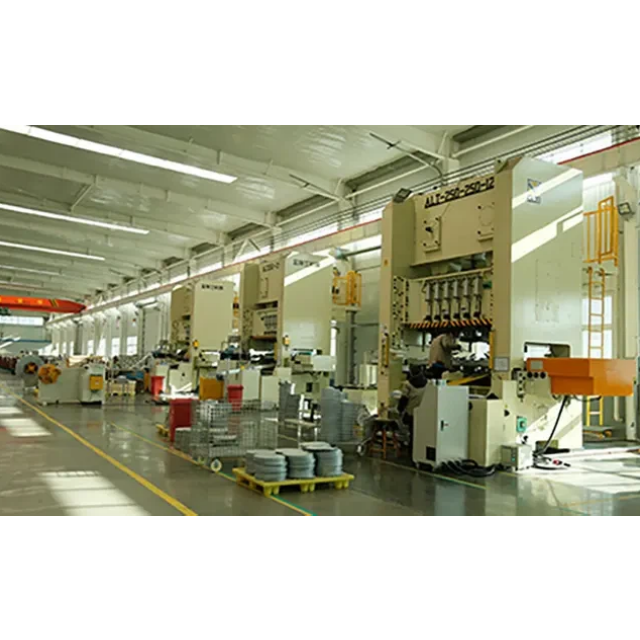
In the fast-paced world of industrial manufacturing, automation has become an essential component for achieving higher productivity, reducing operational costs, and enhancing safety standards. The 2D manipulator is one of the most versatile pieces of automation equipment, specifically designed to streamline production processes in industries that rely on stamping and material handling. At KINGLAN, we specialize in providing top-notch automation solutions like the 2D manipulator, and this article will dive into the role it plays in press automation, explaining how it functions, its advantages, and why it is indispensable for modern manufacturing operations.
Manufacturing industries are under constant pressure to improve their production processes, minimize waste, and ensure safety while maintaining high output levels. This is where automation systems like the 2D manipulator come into play. In industries such as metal stamping, repetitive and time-sensitive tasks are performed at high speeds, making manual handling not only inefficient but also dangerous. The 2D manipulator plays a critical role in automating these tasks, improving cycle times, enhancing safety, and reducing labor costs.
With the growing demand for precision, speed, and cost-efficiency, manufacturers across various sectors are increasingly turning to automation. The 2D manipulator offers a simple yet effective solution for automating material handling tasks, contributing to smoother workflows and better overall results.
A 2D manipulator refers to an automated robotic arm designed to move parts or materials along two-dimensional axes—typically the X-axis (horizontal) and Y-axis (vertical). These two axes allow the manipulator to perform essential tasks such as loading, transferring, and unloading components within a fixed, planar area.
In contrast to three-dimensional manipulators, which offer greater flexibility and motion along the Z-axis (depth), the 2D manipulator focuses on movements that only require horizontal and vertical positioning. While this may sound limiting, the design is highly effective for industries that don’t need complex three-dimensional motions but require fast and precise handling of materials.
For instance, in metal stamping applications, parts must be positioned and moved between stamping presses or from one station to another. This is where a 2D manipulator excels, offering accurate movement and repeatable performance. Its ability to move parts in only two dimensions reduces complexity and makes it more cost-effective, especially for high-speed, repetitive tasks.
The operation of a 2D manipulator in a stamping line involves a series of carefully orchestrated steps. These steps are designed to automate material handling processes, improve consistency, and ensure high throughput. The workflow typically involves the following stages:
Grasping: The manipulator’s gripper or suction pad picks up a part from a defined position. This could be a sheet of metal, a stamped component, or any other material that needs to be moved within the production process.
Lifting: After securely grasping the part, the manipulator raises it along the Y-axis to clear obstacles or position it correctly for the next task in the production line.
Transferring: The manipulator then moves the part horizontally along the X-axis, transferring it from one location to another within the stamping line. This movement is highly controlled to ensure the part is placed with precision.
Placing: Finally, the manipulator places the part in its designated location, such as a stamping press, where the next stage of the manufacturing process will take place. The placement is made with exact accuracy, ensuring the part is in the right position for processing.
The precision, repeatability, and speed of the 2D manipulator make it an ideal solution for stamping operations, where accuracy is essential to ensuring the quality of the final product. Unlike manual labor, which is prone to fatigue and human error, the manipulator performs tasks consistently, ensuring that each part is handled with the same level of precision every time.
Task |
2D Manipulator Capabilities |
Value to Production |
Loading Stock |
Stable planar transfer |
Reduces cycle time |
Part Transfer |
Accurate X-Y motion |
Minimizes defects |
Unloading Finished Parts |
Repeatable drop-off |
Maintains consistent throughput |
These tasks highlight the versatility of the 2D manipulator in press automation. By handling critical material transfer functions, the manipulator improves operational efficiency, reduces the risk of mistakes, and ensures that production lines operate at peak capacity.
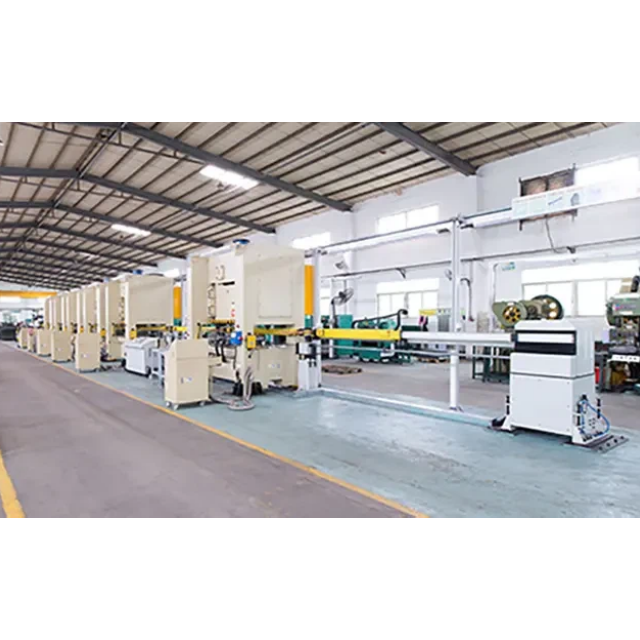
Safety is a critical concern in any industrial setting, and the 2D manipulator significantly enhances safety standards. In stamping operations, workers are exposed to high-speed machinery and potentially dangerous tasks, such as handling heavy parts and moving materials near large presses. By automating these tasks, the manipulator eliminates the need for human workers to interact with hazardous equipment, reducing the risk of injury.
The 2D manipulator also helps to maintain a safer working environment by removing workers from high-risk areas, such as near stamping machines, where accidents could occur. This automation not only safeguards employees but also contributes to the overall efficiency of the production process.
Manual labor in stamping operations can be costly and inefficient. The introduction of a 2D manipulator helps to reduce labor costs by automating repetitive tasks, which would otherwise require human workers. The manipulator’s high precision reduces the likelihood of mistakes, ensuring that parts are handled with accuracy and consistency.
Moreover, by automating tasks, the 2D manipulator reduces the chance of human error, which can lead to costly defects or production delays. This consistency and reliability improve overall product quality, helping companies maintain their reputation for producing high-quality goods.
Speed is a key factor in the manufacturing industry, and the 2D manipulator excels at high-speed operations. Designed for quick, repetitive tasks, it can handle the fast pace required in stamping lines without sacrificing accuracy. The manipulator operates at high speeds, enabling manufacturers to achieve maximum output while maintaining quality standards.
In industries where time is money, the ability to maintain high throughput without sacrificing precision is invaluable. The 2D manipulator offers this capability, ensuring that manufacturers can meet production targets while reducing downtime.
The 2D manipulator is widely used across industries that rely on high-speed, repetitive material handling. Its key applications include:
Automotive Manufacturing: Used for handling components such as metal sheets, parts, and components on stamping lines. The 2D manipulator helps transfer materials between stations, improving efficiency and reducing human intervention.
Electronics Assembly: The 2D manipulator is ideal for transferring delicate parts between workstations with precision. It ensures that parts are positioned correctly for further assembly or testing.
Metal Stamping: The 2D manipulator is used extensively in metal stamping processes, where parts need to be moved accurately between stations to undergo various stages of processing.
The 2D manipulator is particularly well-suited for industries where high-speed, repetitive material handling is necessary. Compared to traditional manual labor, it offers greater consistency, speed, and safety, leading to improved productivity and reduced operational costs.
In conclusion, the 2D manipulator is a critical tool for modern press automation. It offers a range of benefits, including increased safety, reduced labor costs, and high-speed production capabilities. By automating essential tasks such as loading, transferring, and unloading parts, it ensures a more efficient, reliable, and safer production line.
As industries continue to embrace automation, the 2D manipulator is set to play a crucial role in improving manufacturing processes. Whether you’re looking to enhance the efficiency of your stamping operation, reduce manual labor, or increase throughput, the 2D manipulator is the solution you need.
At KINGLAN, we are committed to providing cutting-edge automation solutions that help manufacturers improve their production lines. Contact us today to learn more about how our high-quality 2D manipulator can optimize your press automation processes.
Ready to integrate a 2D manipulator into your production process? Contact KINGLAN today for more information and to get started with the best press automation solutions available.
Q1: What is a 2D manipulator used for in press automation?
A 2D manipulator is used to automate tasks such as loading, transferring, and unloading materials on a stamping production line, enhancing speed and accuracy.
Q2: How does a 2D manipulator improve safety in stamping operations?
By handling dangerous tasks such as moving heavy parts and operating in hazardous areas, the manipulator reduces the need for human intervention, improving worker safety.
Q3: Can a 2D manipulator handle heavy materials?
Yes, the 2D manipulator is designed to handle a wide range of materials, from lightweight parts to heavier components, with high precision and reliability.
Q4: How does a 2D manipulator differ from a 3D manipulator?
A 2D manipulator operates along two axes (X and Y), making it ideal for planar movements, whereas a 3D manipulator offers additional flexibility with movement along the Z-axis as well.